Search by recipe name, ingredient, category or feature.
The Grand Athenian Pastitsio
I’ll admit it—I put off making pastitsio for years.
Every recipe seemed to come with a warning: long-simmered meat sauce, homemade béchamel, endless layering, and an overnight rest. It sounded less like dinner and more like a weekend commitment.
Then I finally made it. One forkful was all it took to wonder why I’d waited so long.
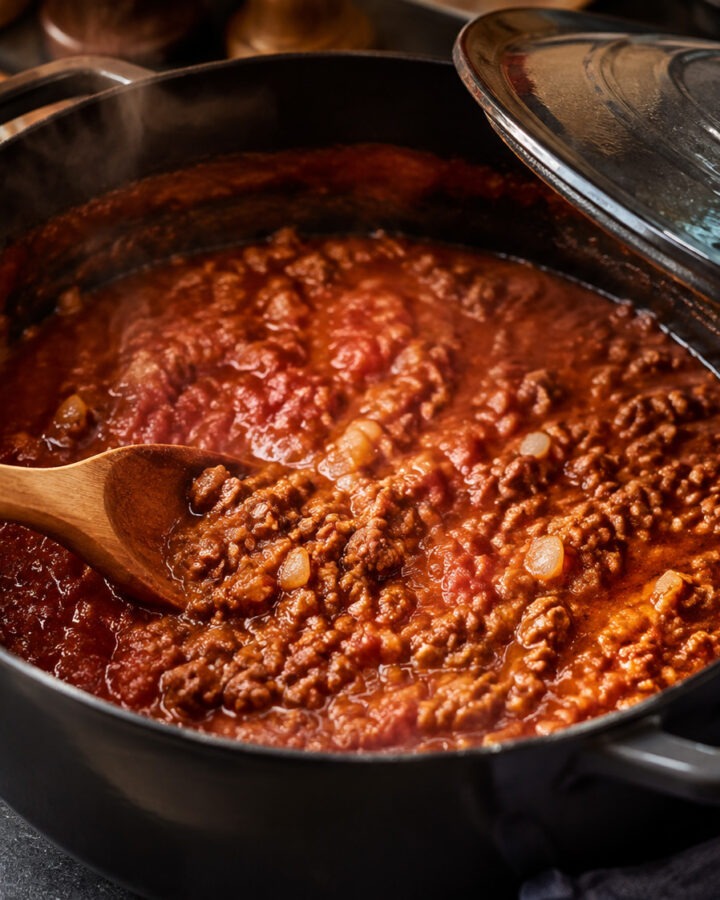
Heat a generous drizzle of olive oil in a large, heavy-based casserole over a medium heat. Add the diced onion with a pinch of sea salt and cook gently for 6–8 minutes until softened and translucent. Add the beef mince, breaking it up with a wooden spoon, and cook until evenly browned.
Stir in the passata and ground cinnamon, season generously with salt and freshly ground black pepper, then bring the sauce to a gentle simmer. Partially cover the pan with a lid and leave to cook slowly for around 3 hours, stirring occasionally, until rich, thick and deeply flavoured. Remove from the heat, allow to cool completely, then refrigerate overnight. This resting time is highly recommended, as it allows the flavours to mature and develop beautifully.
When you’re ready to assemble the pastitsio, remove the meat sauce from the fridge and allow it to come back to room temperature. Meanwhile, grate the cheese and divide it into three equal portions for layering.
Bring a large saucepan of generously salted water to the boil and cook the pastitsio pasta until just al dente, around 1–2 minutes less than the packet instructions. Drain thoroughly and leave to cool for a few minutes before transferring to a large bowl. Add the beaten egg and gently toss until every piece of pasta is lightly coated. This helps the pasta hold together when sliced.
Preheat the oven to 180°C (160°C Fan/Gas Mark 4). Lightly grease a large baking dish with olive oil or butter. Spread the pasta evenly across the base before scattering over the first third of the grated cheese. Spoon the meat sauce evenly over the pasta using a slotted spoon, leaving any excess liquid behind. Finish with the second layer of cheese, creating generous layers of pasta, cheese, slow-cooked meat and more cheese.
To prepare the béchamel, melt the butter in a large saucepan over a medium heat. Whisk in the flour and cook for around 2 minutes, stirring continuously to remove any raw flour taste. Gradually pour in the milk, whisking constantly until the sauce is perfectly smooth and free from lumps. Continue cooking until it thickens and just begins to bubble.
In a separate bowl, whisk together the eggs with the extra milk until smooth. Slowly pour this mixture into the béchamel while whisking continuously. Return the pan to a gentle heat for another minute or two until the sauce becomes thick, glossy and wonderfully velvety, then remove from the heat and leave to rest for a few minutes.
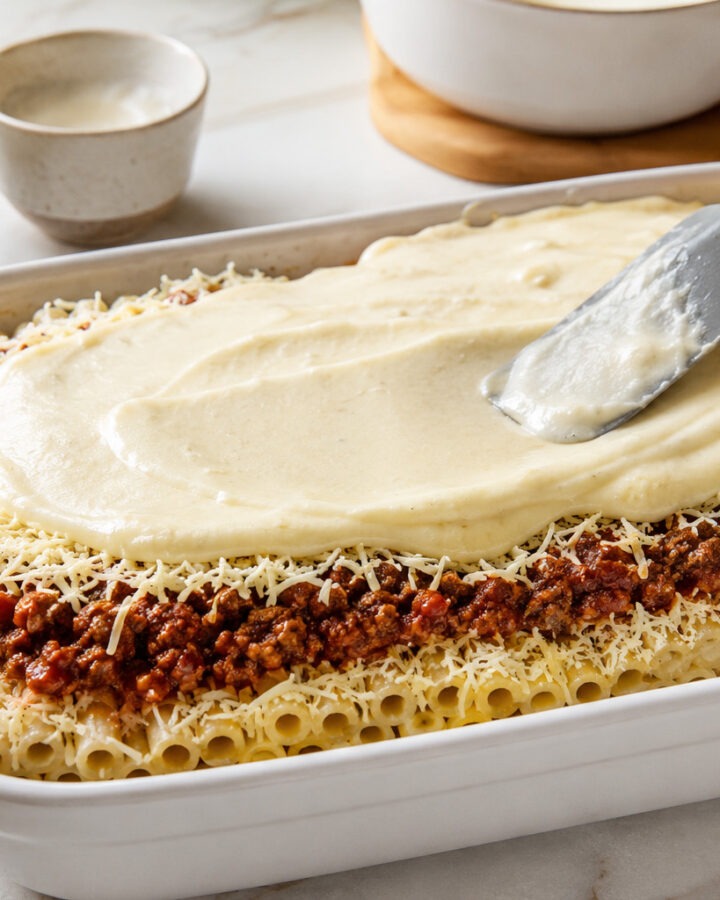
Pour the warm béchamel evenly over the meat layer, smoothing the surface with a spatula until completely covered. Scatter over the remaining cheese, then drizzle with the melted butter to encourage a beautifully crisp, golden finish.
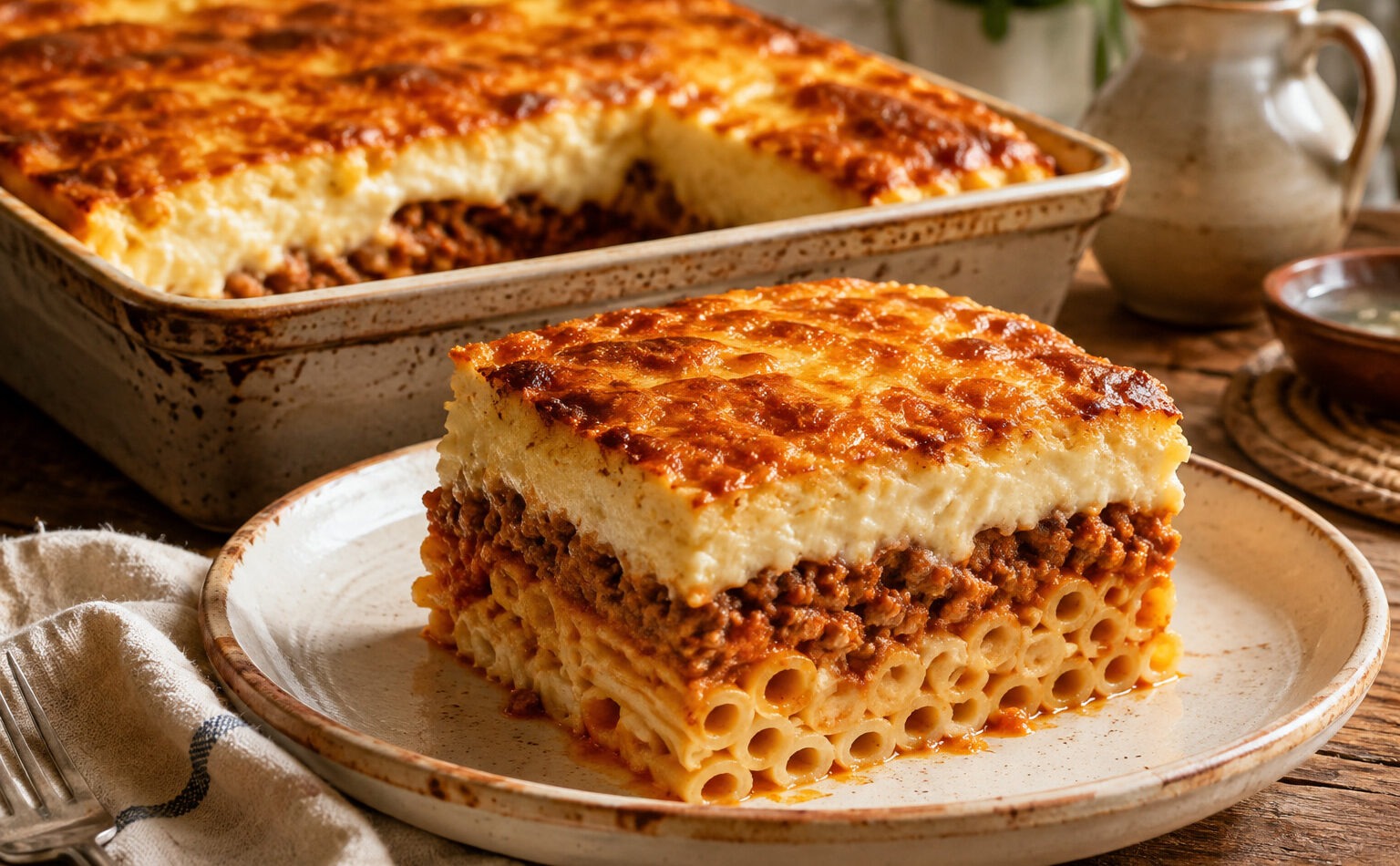
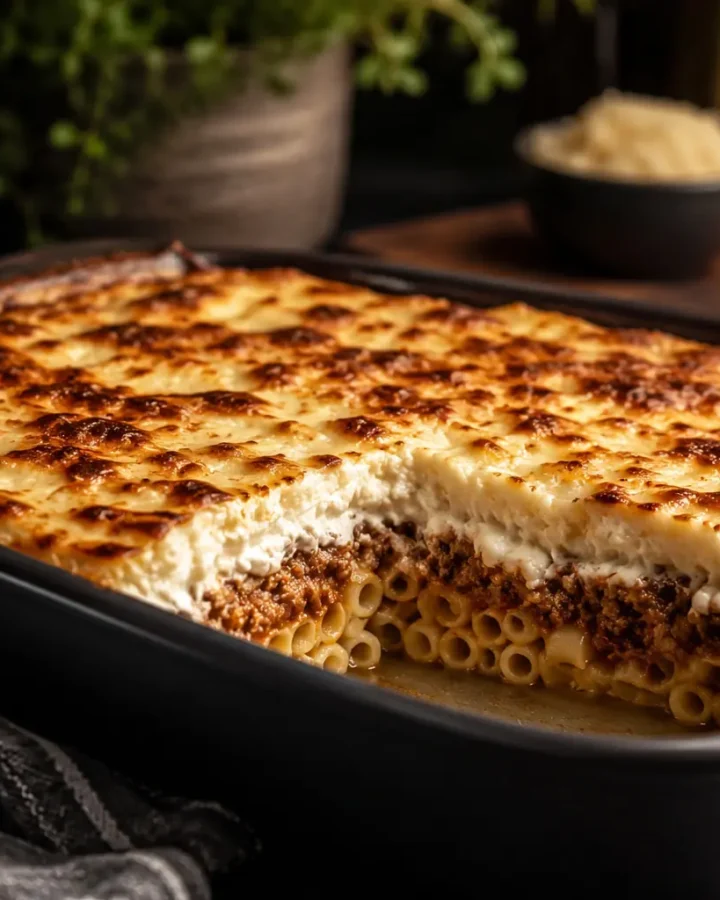
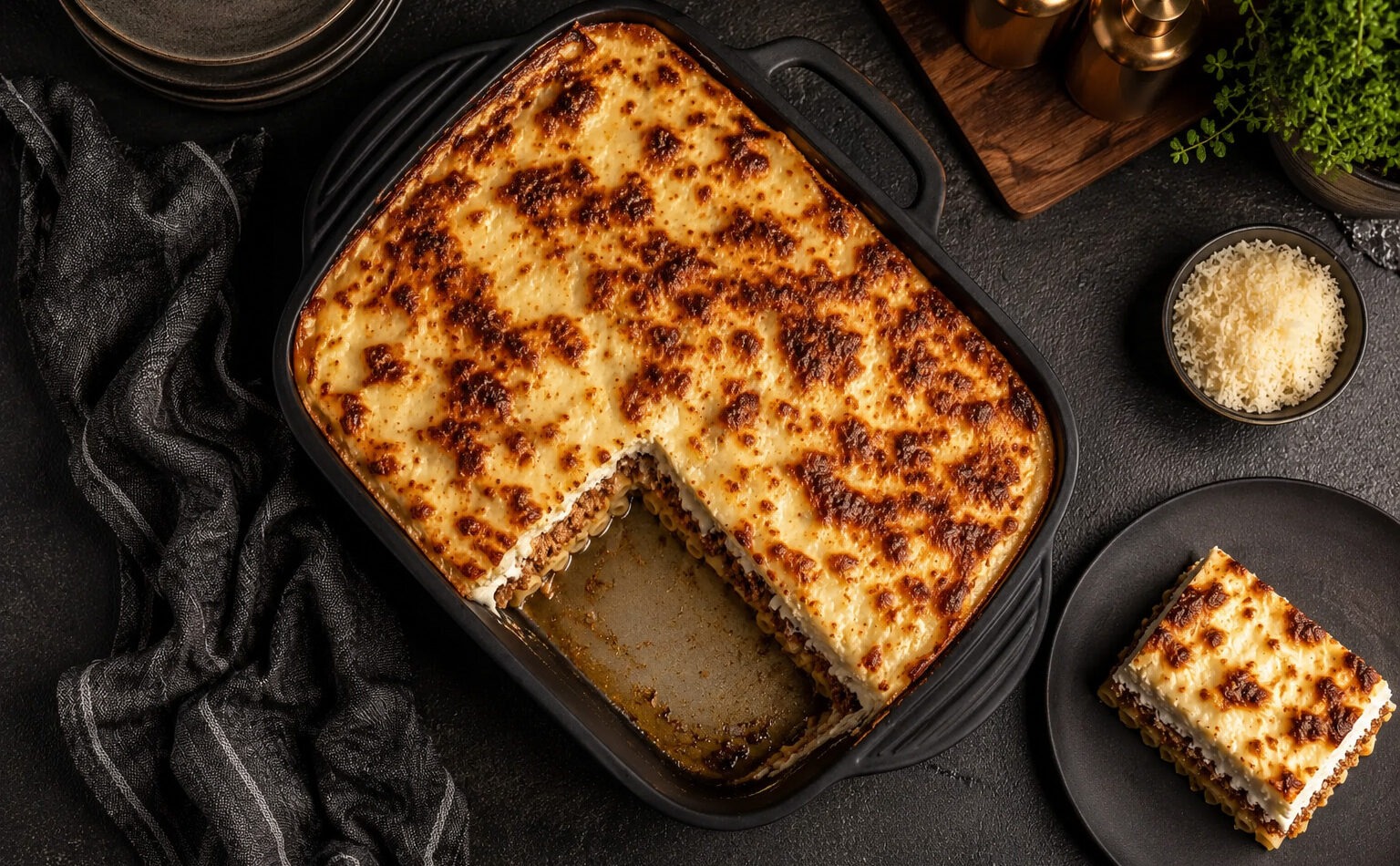
Place the baking dish on a baking tray and bake for 1 hour, or until the top is deeply golden and the filling is bubbling around the edges. For an even richer colour, place the dish under a hot grill for the final 3–5 minutes, watching carefully to prevent it from catching.
Remove the pastitsio from the oven and leave it to rest for 10–15 minutes before serving. This final pause allows the layers to settle, ensuring each slice holds its shape beautifully while remaining wonderfully moist and full of flavour.
A few details make all the difference
01
Cook the Pasta
Cook the pastitsio pasta until just al dente, around 1–2 minutes less than the packet instructions. Drain thoroughly and leave to cool for a few minutes before transferring to a large bowl.
02
Make the Velvet Béchamel
Melt the butter in a large saucepan over a medium heat. Whisk in the flour and cook gently for around 2 minutes, stirring constantly to create a smooth roux with no raw flour flavour.
03
Bake Until Beautifully Golden
Carefully pour the warm béchamel over the meat layer, smoothing it into an even blanket that reaches every corner of the dish. Scatter over the remaining grated cheese before drizzling with the melted butter for an irresistible golden finish.
Why this recipe works
The secret is that very little of the process demands your attention. The meat sauce quietly bubbles away while you get on with your day. An overnight rest allows the flavours to deepen and mellow into something extraordinary. When it’s finally time to assemble, it’s simply a matter of layering silky pasta, richly spiced beef, generous handfuls of cheese and finishing everything with a luxuriously smooth béchamel that bakes into a beautifully golden crust. This isn’t a rushed midweek meal.
Cook’s notes
Don’t skip the overnight rest
The meat sauce becomes noticeably richer and more aromatic after a night in the fridge, giving the finished pastitsio its signature depth of flavour.
Cook the pasta just shy of al dente
It will continue cooking in the oven, ensuring the finished bake holds its shape without becoming soft.
Freshly grate your cheese
Pre-grated cheeses often contain anti-caking agents that prevent them melting as smoothly. Freshly grated Kasseri delivers the best flavour and texture.
Whisk constantly
A silky béchamel is the hallmark of a great pastitsio. Add the milk gradually and keep the whisk moving to achieve a perfectly smooth sauce.
Heat a generous drizzle of olive oil in a large, heavy-based casserole over a medium heat. Add the diced onion with a pinch of sea salt and cook gently for 6–8 minutes until softened and translucent. Add the beef mince, breaking it up with a wooden spoon, and cook until evenly browned.
Stir in the passata and ground cinnamon, season generously with salt and freshly ground black pepper, then bring the sauce to a gentle simmer. Partially cover the pan with a lid and leave to cook slowly for around 3 hours, stirring occasionally, until rich, thick and deeply flavoured. Remove from the heat, allow to cool completely, then refrigerate overnight. This resting time is highly recommended, as it allows the flavours to mature and develop beautifully.
When you’re ready to assemble the pastitsio, remove the meat sauce from the fridge and allow it to come back to room temperature. Meanwhile, grate the cheese and divide it into three equal portions for layering.
Bring a large saucepan of generously salted water to the boil and cook the pastitsio pasta until just al dente, around 1–2 minutes less than the packet instructions. Drain thoroughly and leave to cool for a few minutes before transferring to a large bowl. Add the beaten egg and gently toss until every piece of pasta is lightly coated. This helps the pasta hold together when sliced.
Preheat the oven to 180°C (160°C Fan/Gas Mark 4). Lightly grease a large baking dish with olive oil or butter. Spread the pasta evenly across the base before scattering over the first third of the grated cheese. Spoon the meat sauce evenly over the pasta using a slotted spoon, leaving any excess liquid behind. Finish with the second layer of cheese, creating generous layers of pasta, cheese, slow-cooked meat and more cheese.
To prepare the béchamel, melt the butter in a large saucepan over a medium heat. Whisk in the flour and cook for around 2 minutes, stirring continuously to remove any raw flour taste. Gradually pour in the milk, whisking constantly until the sauce is perfectly smooth and free from lumps. Continue cooking until it thickens and just begins to bubble.
In a separate bowl, whisk together the eggs with the extra milk until smooth. Slowly pour this mixture into the béchamel while whisking continuously. Return the pan to a gentle heat for another minute or two until the sauce becomes thick, glossy and wonderfully velvety, then remove from the heat and leave to rest for a few minutes.
Pour the warm béchamel evenly over the meat layer, smoothing the surface with a spatula until completely covered. Scatter over the remaining cheese, then drizzle with the melted butter to encourage a beautifully crisp, golden finish.
Place the baking dish on a baking tray and bake for 1 hour, or until the top is deeply golden and the filling is bubbling around the edges. For an even richer colour, place the dish under a hot grill for the final 3–5 minutes, watching carefully to prevent it from catching.
Remove the pastitsio from the oven and leave it to rest for 10–15 minutes before serving. This final pause allows the layers to settle, ensuring each slice holds its shape beautifully while remaining wonderfully moist and full of flavour.
Cook’s notes
Don’t skip the overnight rest: The meat sauce becomes noticeably richer and more aromatic after a night in the fridge, giving the finished pastitsio its signature depth of flavour.
Cook the pasta just shy of al dente: It will continue cooking in the oven, ensuring the finished bake holds its shape without becoming soft.
Freshly grate your cheese: Pre-grated cheeses often contain anti-caking agents that prevent them melting as smoothly. Freshly grated Kasseri delivers the best flavour and texture.
Whisk constantly: A silky béchamel is the hallmark of a great pastitsio. Add the milk gradually and keep the whisk moving to achieve a perfectly smooth sauce.
Cooking mode
The Grand Athenian Pastitsio
Heat a generous drizzle of olive oil in a large, heavy-based casserole over a medium heat. Add the diced onion with a pinch of sea salt and cook gently for 6–8 minutes until softened and translucent. Add the beef mince, breaking it up with a wooden spoon, and cook until evenly browned.
Stir in the passata and ground cinnamon, season generously with salt and freshly ground black pepper, then bring the sauce to a gentle simmer. Partially cover the pan with a lid and leave to cook slowly for around 3 hours, stirring occasionally, until rich, thick and deeply flavoured. Remove from the heat, allow to cool completely, then refrigerate overnight. This resting time is highly recommended, as it allows the flavours to mature and develop beautifully.
When you’re ready to assemble the pastitsio, remove the meat sauce from the fridge and allow it to come back to room temperature. Meanwhile, grate the cheese and divide it into three equal portions for layering.
Bring a large saucepan of generously salted water to the boil and cook the pastitsio pasta until just al dente, around 1–2 minutes less than the packet instructions. Drain thoroughly and leave to cool for a few minutes before transferring to a large bowl. Add the beaten egg and gently toss until every piece of pasta is lightly coated. This helps the pasta hold together when sliced.
Preheat the oven to 180°C (160°C Fan/Gas Mark 4). Lightly grease a large baking dish with olive oil or butter. Spread the pasta evenly across the base before scattering over the first third of the grated cheese. Spoon the meat sauce evenly over the pasta using a slotted spoon, leaving any excess liquid behind. Finish with the second layer of cheese, creating generous layers of pasta, cheese, slow-cooked meat and more cheese.
To prepare the béchamel, melt the butter in a large saucepan over a medium heat. Whisk in the flour and cook for around 2 minutes, stirring continuously to remove any raw flour taste. Gradually pour in the milk, whisking constantly until the sauce is perfectly smooth and free from lumps. Continue cooking until it thickens and just begins to bubble.
In a separate bowl, whisk together the eggs with the extra milk until smooth. Slowly pour this mixture into the béchamel while whisking continuously. Return the pan to a gentle heat for another minute or two until the sauce becomes thick, glossy and wonderfully velvety, then remove from the heat and leave to rest for a few minutes.
Pour the warm béchamel evenly over the meat layer, smoothing the surface with a spatula until completely covered. Scatter over the remaining cheese, then drizzle with the melted butter to encourage a beautifully crisp, golden finish.
Place the baking dish on a baking tray and bake for 1 hour, or until the top is deeply golden and the filling is bubbling around the edges. For an even richer colour, place the dish under a hot grill for the final 3–5 minutes, watching carefully to prevent it from catching.
Remove the pastitsio from the oven and leave it to rest for 10–15 minutes before serving. This final pause allows the layers to settle, ensuring each slice holds its shape beautifully while remaining wonderfully moist and full of flavour.
A letter from table number seven
Something delicious for the weekend.
Seasonal recipes and stories, delivered occasionally.
error: Content is protected !!
We use cookies to ensure that we give you the best experience on our website. If you continue to use this site we will assume that you are happy with it.