
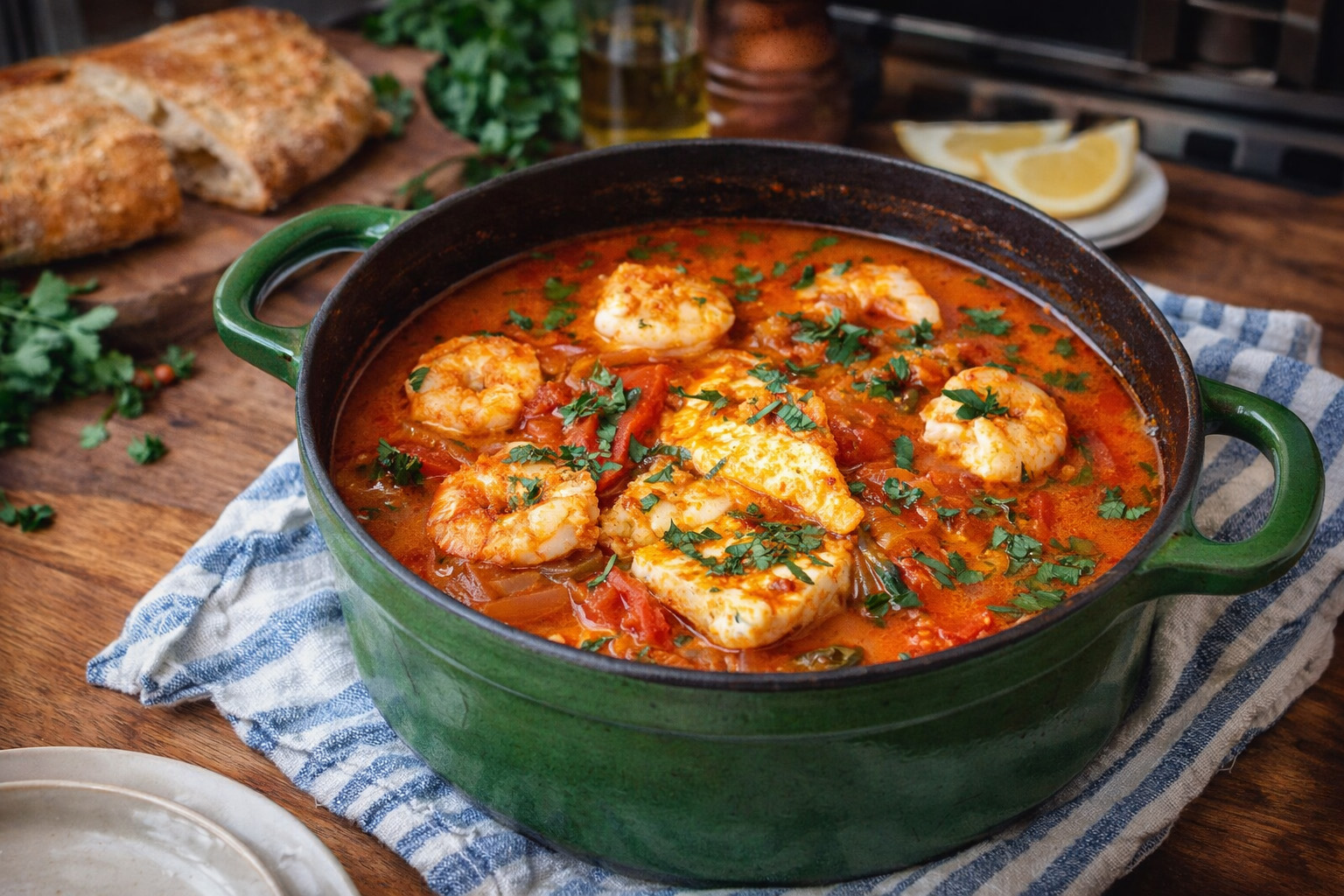
There is something deeply comforting about a well-made fish stew—the way it gathers flavour slowly, gently, without ever feeling heavy. This Portuguese version leans into that simplicity, drawing richness from ripe tomatoes, delicate spices, and tender pieces of fresh fish that soften just enough in the heat.
It’s the kind of dish that feels generous without effort. Everything comes together in one pot, left to simmer until the broth deepens and the kitchen fills with warmth. Whether it’s a quiet supper at home or a table shared with friends, it holds its own with understated ease.
Ingredients, Thoughtfully Considered
Fish
Choose a firm white fish—cod or haddock are ideal—for their ability to hold shape while becoming beautifully tender. In their absence, snapper or tilapia will work just as well, offering a slightly different but equally pleasing finish.
Shellfish (Optional)
A handful of prawns brings a subtle sweetness and contrast in texture. Scallops make an elegant alternative, or simply leave them out for a more pared-back, fish-led stew.
Spice & Warmth
Smoked paprika lends a gentle, lingering depth. If using regular paprika, consider a whisper of cumin or chilli to round out the warmth without overwhelming the dish.
Stock
Fish stock provides the most natural backbone, though a light vegetable broth or even chicken stock will carry the stew with quiet reliability, each lending its own nuance.
Freshness at the Finish
A squeeze of lemon just before serving is essential—it lifts everything, sharpening the flavours into focus. Finish with parsley, or soften the edges with basil or coriander for a slightly different accent.
On Achieving the Right Consistency
A good stew should feel composed—neither too loose nor overly thick, but somewhere gently in between.
Begin with patience. Let the onions soften slowly until translucent and sweet, forming a base that anchors everything that follows. When the tomatoes and paste are added, give them time—this is where the stew begins to deepen, the flavours concentrating as they cook down.
Simmer uncovered, allowing the liquid to reduce naturally. This quiet evaporation is what brings body to the broth, creating that rich, spoon-coating texture.
If needed, let it go a little longer—time will often do the work for you. Only at the very end, if absolutely necessary, a small slurry of cornflour can be stirred through to gently bring things together.
It’s a dish that rewards restraint—layered, balanced, and all the more satisfying for its simplicity.
Prepare
Cook
Serving
Ingredients
For the Stew
-
700g firm white fish fillets (cod, haddock, or sea bass), cut into generous pieces
-
225g raw prawns, peeled and deveined (optional)
-
2 tablespoons good olive oil
-
1 medium onion, finely chopped
-
3 garlic cloves, finely minced
-
1 red pepper, diced
-
2 ripe tomatoes, diced (or 400g tinned tomatoes)
-
2 tablespoons tomato purée
-
240ml fish stock (or water, if preferred)
-
120ml dry white wine (optional, but recommended)
-
1 teaspoon smoked paprika
-
½ teaspoon cayenne pepper, or to taste
-
1 bay leaf
-
Sea salt and freshly ground black pepper
-
A small handful of fresh parsley, finely chopped
-
Juice of 1 lemon
To Serve
-
Thick slices of crusty bread, for dipping
Timing
This is a dish that feels slow, but comes together with surprising ease.
Allow around 15 minutes for preparation—chopping, gathering, and setting the rhythm—followed by 25 to 30 minutes of gentle cooking, where everything is left to soften, deepen, and settle into itself.
In just under an hour, you’ll have something that tastes as though it’s been simmering all afternoon—rich, balanced, and ready to bring to the table without ceremony.
Method
1. Begin the Base
Warm the olive oil in a wide, heavy-based pan over a medium heat. Add the onion and cook gently until soft, translucent, and just beginning to sweeten—about 5 minutes. This quiet step lays the foundation for everything that follows.
2. Build the Aromatics
Stir in the garlic and red pepper, allowing them to soften and release their fragrance over the next 2–3 minutes. Keep the heat steady—nothing should catch or colour too quickly.
3. Deepen with Tomatoes
Add the tomatoes and tomato purée, stirring well. Let the mixture cook for a further 5 minutes, giving it time to break down and concentrate, forming a rich, cohesive base.
4. Introduce the Liquids
Pour in the fish stock, followed by the white wine if using. Add the smoked paprika, cayenne, bay leaf, and a measured seasoning of salt and black pepper. Stir gently—the broth should already feel rounded and aromatic.
5. Allow it to Settle
Bring the stew to a soft, steady simmer and leave it uncovered for around 10 minutes. This is where the flavours begin to knit together, the liquid reducing slightly into something more concentrated and full.
6. Add the Seafood
Lower in the fish pieces and prawns, stirring carefully so they remain intact. Cover and cook for 5–7 minutes, just until the fish turns opaque and tender, and the prawns blush pink.
7. Finish with Balance
Remove the bay leaf. Squeeze in the lemon juice, stirring lightly to lift and brighten the broth. Taste, and adjust the seasoning with care.
8. To Serve
Ladle into warm bowls and finish with a scattering of fresh parsley. Serve immediately, with thick slices of crusty bread to soak up every last spoonful of the broth.
Notes & Variations
Making it Plant-Based
This stew adapts beautifully to a vegetarian or vegan table. Replace the fish with a generous mix of vegetables—courgette, peppers, and mushrooms work particularly well, offering both texture and depth. Use a good vegetable stock in place of fish stock, and simply omit the prawns. The result is every bit as satisfying, with a slightly earthier character.
Adjusting the Heat
The level of spice can be tailored with ease. For a gentler finish, reduce the cayenne or leave it out entirely. A pinch of sweet paprika or a light scattering of chilli flakes will lend warmth without overwhelming the dish.
Using Frozen Fish
Frozen fish works perfectly well here. Allow it to thaw fully—either overnight in the fridge or gently in a sealed bag submerged in cold water. Once defrosted, pat it dry to remove excess moisture, ensuring the stew remains clean in flavour and texture.
Storing & Reheating
Any leftovers can be kept in an airtight container in the fridge for up to three days. Reheat slowly over a low heat, adding a small splash of water or stock to loosen the broth and restore its silky consistency.

Print & Share
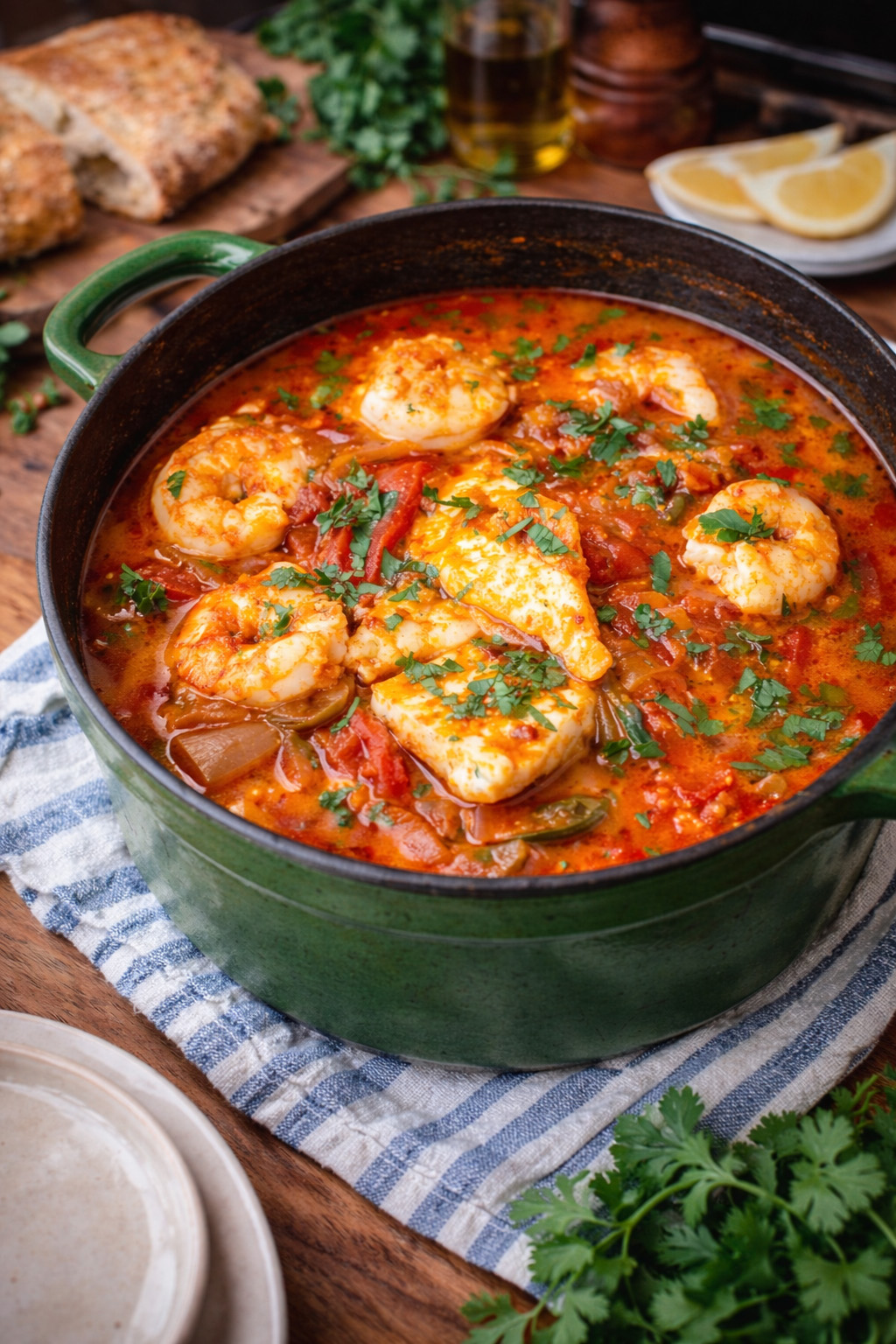

Portuguese Fish Stew, Beautifully Simple
Ingredients
Method
-
Warm the olive oil in a wide, heavy-based pan set over a medium heat. Add the onion and cook slowly until soft, translucent, and delicately sweet—about 5 minutes. This is where the stew begins, quietly building its depth.
-
Add the garlic and red pepper, stirring gently. Allow them to soften and release their fragrance over the next few minutes, keeping the heat steady so nothing takes on too much colour.
-
Stir in the tomatoes and tomato purée, mixing well. Let everything cook down for around 5 minutes, encouraging the mixture to thicken slightly and develop a richer, more rounded flavour.
-
Pour in the fish stock, followed by the white wine if using. Add the smoked paprika, cayenne, bay leaf, and a careful seasoning of salt and black pepper. Stir gently—the broth should already feel warm and inviting.
-
Bring the stew to a soft simmer and leave it uncovered for about 10 minutes. As it reduces, the flavours settle and deepen, the broth becoming more concentrated and cohesive.
-
Add the fish pieces and prawns, folding them through with care. Cover and cook for 5–7 minutes, just until the fish is tender and opaque, and the prawns turn a soft pink.
-
Remove the bay leaf, then squeeze in the lemon juice. Stir lightly to lift and brighten the flavours. Taste, adjusting the seasoning as needed with a light hand.
-
Ladle into warm bowls and finish with a scattering of fresh parsley. Serve at once, with thick slices of crusty bread alongside—perfect for soaking up the fragrant, tomato-rich broth.
-
It’s a method that unfolds gently—each step unhurried, each layer building towards something quietly generous and deeply satisfying.
Discover more from Table Number Seven
Subscribe to get the latest posts sent to your email.