
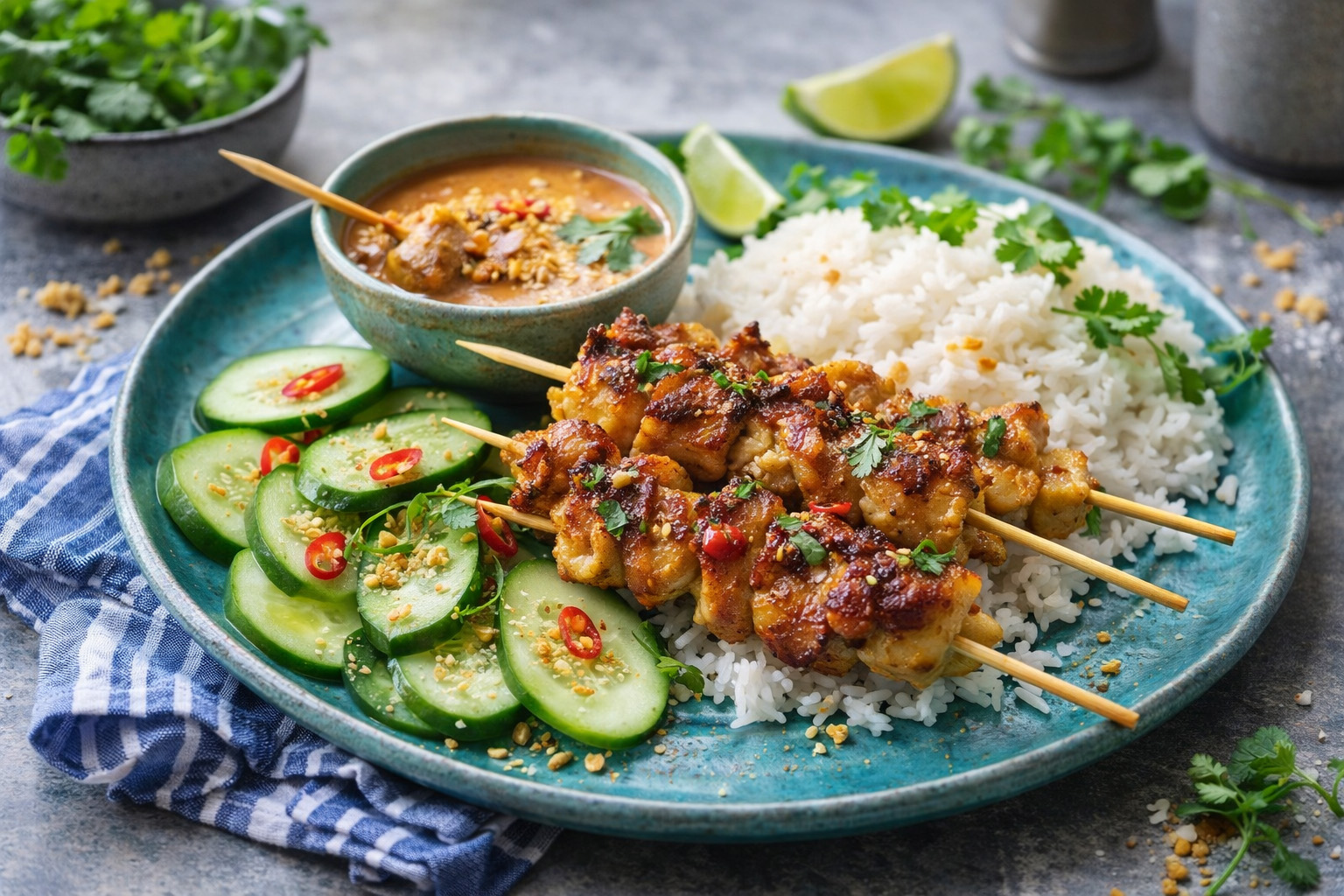
Satay, in its truest form, is a quiet celebration of Thai cooking—simple in composition, yet deeply expressive in flavour. Tender ribbons of chicken are bathed in an aromatic marinade, threaded onto skewers, and kissed by heat until lightly charred at the edges, releasing that unmistakable, intoxicating fragrance.
But it is the accompaniment that elevates the experience entirely. A warm, velvety peanut sauce—rich, savoury, and delicately spiced—clings to each piece with effortless indulgence. It is the sort of sauce that invites pause; a moment of appreciation after the first taste, as you realise something so humble can feel remarkably luxurious.
Served alongside softly steamed jasmine rice, or perhaps a more opulent coconut-infused variation, the dish settles into something both comforting and quietly refined. For those inclined to linger at the table, it pairs beautifully with a fuller spread—think fragrant fried rice, silky noodles, or a vibrant chilli basil stir-fry—transforming a simple plate into a generous, restaurant-worthy feast.
There is, of course, a certain satisfaction in recreating something that feels unmistakably authentic. The aroma alone, as the skewers meet the heat, hints at what’s to come. And with that first taste—balanced, fragrant, deeply moreish—you may find yourself wondering if this is not just reminiscent of your favourite Thai meal, but perhaps even a touch better.
Prepare
Cook
Serving
What Goes Into Chicken Satay & Thai Peanut Sauce
At first glance, Chicken Satay feels wonderfully uncomplicated—yet it is this very restraint that allows each ingredient to speak with clarity and purpose. A handful of thoughtfully chosen elements come together to create something far greater than the sum of its parts.
The Quiet Hero: Thai Red Curry Paste
A small measure of Thai red curry paste works discreetly in the background, woven into both the marinade and the sauce. It does not dominate, nor should it. Instead, it lends depth—an aromatic warmth that gently underpins the dish without ever announcing itself too loudly.
For this recipe, a good-quality shop-bought paste is perfectly suited. When used in such modest quantity, it offers balance and consistency with very little effort.
A Silken Peanut Sauce
The peanut sauce is, in many ways, the soul of the dish—luxurious yet disarmingly simple to prepare. Everything is brought together in a single pan and allowed to gently simmer into a smooth, velvety finish.
You will need:
-
Coconut milk, for richness and body
-
Thai red curry paste, for subtle complexity
-
A splash of cider or white vinegar, to lift and balance
-
Pure peanut butter, deeply nutty and unadulterated
-
Soy sauce, for savoury depth
-
A touch of sugar, to round the edges
-
Cooking salt or kosher salt, to season with precision
The choice of peanut butter is quietly transformative. A natural variety—made solely from peanuts—delivers a cleaner, more pronounced flavour. Its looser texture also means less dilution is required, resulting in a sauce that feels fuller, richer, and unmistakably more refined.
The Marinade: Building Flavour from Within
A well-marinated skewer needs little adornment. The chicken itself should be deeply savoury, fragrant, and entirely satisfying even before it meets the sauce.
For the marinade:
-
Chicken thighs for succulence (though breast or tenderloin work beautifully too)
-
Thai red curry paste
-
A gentle touch of curry powder
-
Coconut milk, to tenderise and enrich
-
Sugar, for balance
-
Cooking salt or kosher salt
Given time, the marinade works its quiet magic. A few hours will reward you generously, though even a brief rest allows the flavours to settle and soften into the meat.
When brought together, the result is a study in balance—warm spice, gentle sweetness, savoury depth, and that unmistakable, lingering richness of peanut. A dish that feels both effortless and indulgent, in equal measure.
Cooking the Chicken Satay Skewers
There is something quietly irresistible about chicken satay as it meets the heat—the gentle sizzle, the caramelisation at the edges, the fragrance that lingers in the air long before the first bite.
While these skewers are a natural companion to summer barbecues, they are just as effortlessly prepared indoors. A hot pan on the stove yields beautifully charred, golden pieces with minimal fuss—perfect for a more relaxed, everyday approach.
For those seeking a more evocative, authentic touch, cooking over charcoal transforms the experience entirely. The open flame imparts a delicate smokiness, echoing the street-side grills of Thailand, where satay is turned patiently over glowing coals and served fresh, still warm from the fire.
Traditionally offered as a starter—often alongside delicately spiced fish cakes—chicken satay also holds its own as a main course. Serve it simply with fragrant jasmine rice, or elevate it with soft, coconut-infused rice for a richer pairing.
If the mood calls for something more generous, it sits beautifully within a wider table: think deeply savoury fried rice, sweet and aromatic pineapple rice, or glossy stir-fried noodles. A crisp, refreshing salad—lightly dressed with sesame—offers contrast, bringing brightness and balance to the plate.
It is, in every sense, a dish that adapts with ease—equally at home as a casual supper or the centrepiece of a more indulgent spread.
Refinements — Ensuring a Flawless Result
If the mood calls for something more indulgent, let this Chicken Satay set the tone for a beautifully composed Thai feast. Begin with these fragrant skewers, served warm with their silken peanut sauce, before moving into a richer, more expansive table.
A deeply savoury chilli basil stir-fry brings heat and intensity, while a slow-simmered curry—whether gently spiced Massaman, vibrant green, or aromatic red—adds depth and comfort. Coconut rice, soft and delicately perfumed, anchors the meal with quiet elegance. And for those who favour something a little more indulgent, glossy, wide ribbons of Pad See Ew offer a satisfying, restaurant-worthy finish.
It is the kind of spread designed for lingering—layered, generous, and effortlessly celebratory.

Print & Share
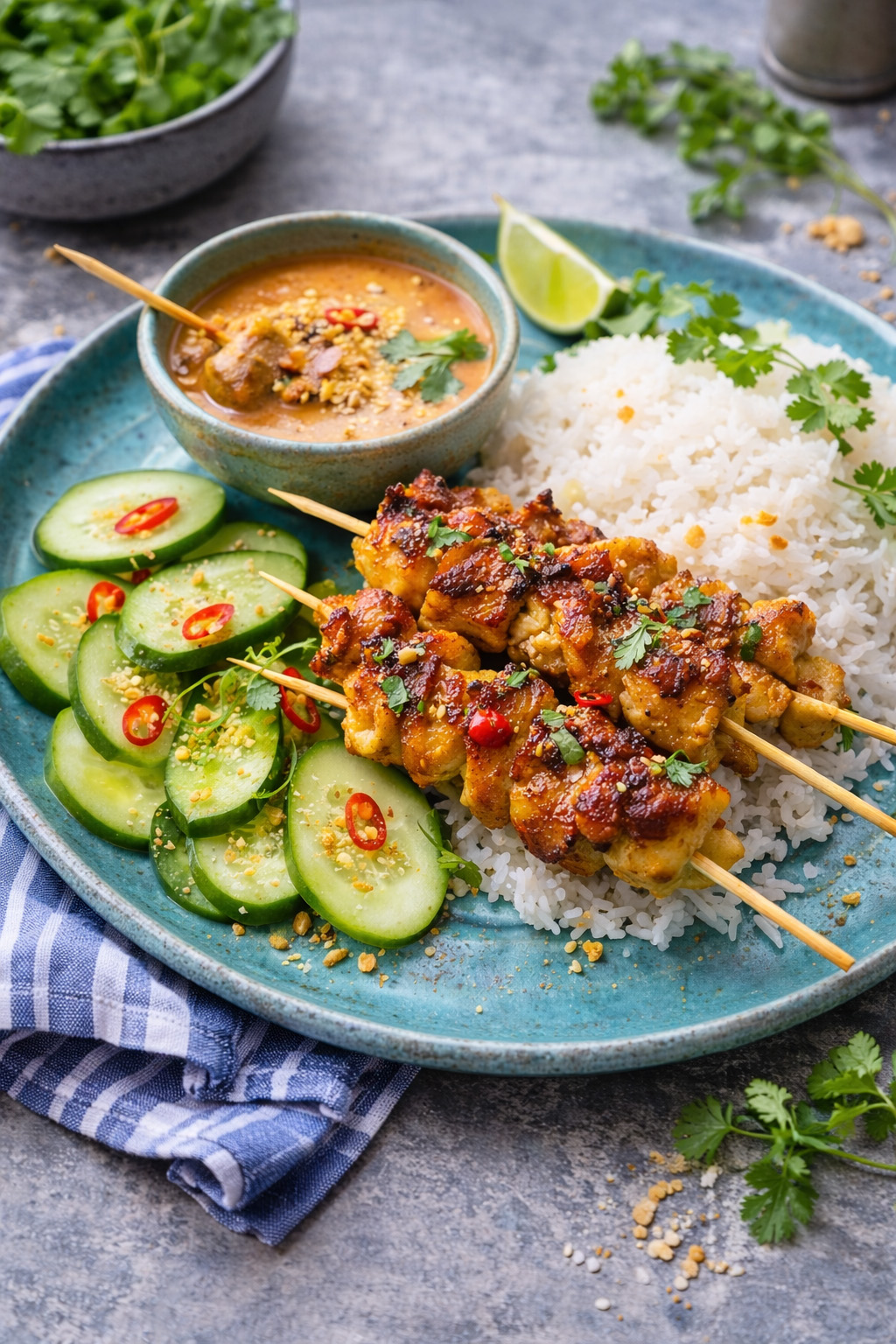

Fragrant Thai Chicken Satay with Silken Peanut Dressing
And yet, it is the peanut sauce that completes the experience. Silken, savoury, and quietly indulgent, it transforms each bite into something altogether more luxurious.
For the most refined result, a natural peanut butter—made solely from peanuts—offers a purer, more pronounced flavour, lending the sauce a deeper, more elegant finish. That said, a classic peanut butter will still yield a beautifully balanced sauce, rich and comforting in its own way.
Ingredients
Method
-
Preparing the Skewers
-
If cooking over open flame or charcoal, begin by soaking the bamboo skewers in water for at least two hours—this simple step ensures they remain intact as they meet the heat.
-
In a large bowl, combine the chicken with the marinade, loosening it with a quarter cup of coconut milk. Allow the mixture to rest—briefly if needed, or longer for deeper flavour—until the chicken is fragrant and well coated.
-
Thread the pieces onto skewers with a light hand, allowing a little space between each piece so they cook evenly and take on that desirable char.
-
Cooking
-
Heat a generous drizzle of oil in a large pan over medium-high heat. Lay the skewers in batches, letting them sear undisturbed before turning. After a few minutes on each side, they will take on a rich golden colour, lightly caramelised at the edges and irresistibly aromatic.
-
The Peanut Sauce
-
In a small saucepan, bring together the remaining coconut milk with the peanut sauce ingredients over a gentle heat. Stir until smooth, then allow it to simmer softly for a few minutes, thickening into a warm, velvety consistency.
-
Adjust with a splash of water if needed—the sauce should fall easily from a spoon, yet retain a pleasing richness. Keep it covered and warm while the skewers finish cooking.
-
To Serve
-
Spoon the sauce into a serving bowl and finish with a scattering of finely chopped peanuts. Arrange the skewers generously on a platter, then garnish with more peanuts, fresh coriander, and a touch of sliced red chilli for colour and brightness.
-
Serve the sauce alongside for dipping, allowing each skewer to be coated as desired. A bowl of fragrant jasmine rice—or something more indulgent, like Thai fried rice—completes the table with quiet elegance.
Notes
1. Skewers
Traditional Thai satay skewers are often shorter than their Western counterparts—practical, charming, and perfectly suited to pan cooking. That said, longer skewers may be used if you prefer a more generous presentation.
2. Chicken
Chicken thighs offer the most succulent result, their natural richness lending tenderness and flavour. Breast or tenderloin may be used for a leaner finish. This marinade also adapts beautifully to beef or pork—simply choose a well-marbled cut that responds well to quick, high-heat cooking.
3. Curry Powder
A supporting note rather than a dominant flavour—any good-quality curry powder will do nicely here, adding warmth without overpowering the dish.
4. Red Curry Paste
A well-balanced Thai red curry paste acts as a quiet enhancer throughout. A shop-bought version is perfectly suitable, lending depth with ease.
If using a homemade paste, a little adjustment brings everything into harmony—slightly increasing the quantity and adding a touch of fish sauce and sugar ensures the seasoning remains beautifully balanced.
5. Peanut Butter
For a truly elegant peanut sauce, natural peanut butter—made solely from peanuts—offers a deeper, cleaner flavour. Its looser texture also allows for a more controlled consistency.
A standard peanut butter spread may be used, though it will yield a slightly sweeter, thicker sauce. If needed, adjust gently—too much water will dilute the richness you’re aiming to preserve.
For a more traditional approach, blending raw peanuts with coconut milk creates an exceptionally smooth, deeply flavoured base.
6. Soy Sauce
Dark soy sauce lends both seasoning and a deeper, more lustrous colour. A lighter soy may be substituted, though the final tone of the sauce will be more delicate.
7. Vinegar
Cider vinegar provides a gentle acidity that lifts the sauce without sharpness. White vinegar is a suitable alternative. Other clear vinegars may be used if needed, though they will subtly alter the balance.
8. Peanut Sauce Yield
This recipe produces a generous quantity of sauce—more than you may need for a single serving, though it keeps beautifully. Stored in the refrigerator, it will hold for up to a week, and freezes well for future use.
It is these quiet considerations—the choice of cut, the balance of seasoning, the texture of the sauce—that elevate a simple dish into something altogether more thoughtful and complete.
Discover more from Table Number Seven
Subscribe to get the latest posts sent to your email.