
Ingredients
Method
- Preparing the Skewers
- If cooking over open flame or charcoal, begin by soaking the bamboo skewers in water for at least two hours—this simple step ensures they remain intact as they meet the heat.
- In a large bowl, combine the chicken with the marinade, loosening it with a quarter cup of coconut milk. Allow the mixture to rest—briefly if needed, or longer for deeper flavour—until the chicken is fragrant and well coated.
- Thread the pieces onto skewers with a light hand, allowing a little space between each piece so they cook evenly and take on that desirable char.
- Cooking
- Heat a generous drizzle of oil in a large pan over medium-high heat. Lay the skewers in batches, letting them sear undisturbed before turning. After a few minutes on each side, they will take on a rich golden colour, lightly caramelised at the edges and irresistibly aromatic.
- The Peanut Sauce
- In a small saucepan, bring together the remaining coconut milk with the peanut sauce ingredients over a gentle heat. Stir until smooth, then allow it to simmer softly for a few minutes, thickening into a warm, velvety consistency.
- Adjust with a splash of water if needed—the sauce should fall easily from a spoon, yet retain a pleasing richness. Keep it covered and warm while the skewers finish cooking.
- To Serve
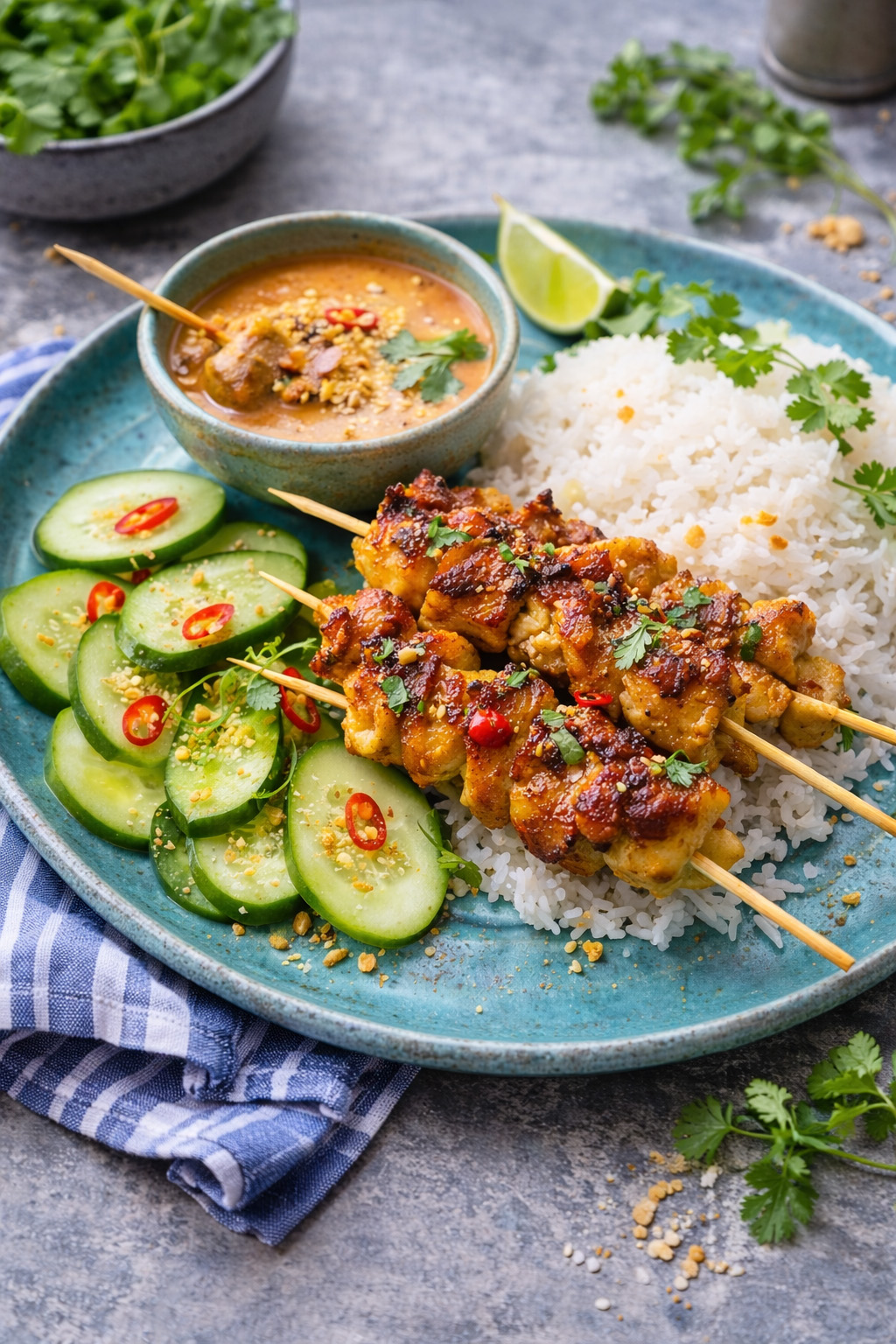
- Spoon the sauce into a serving bowl and finish with a scattering of finely chopped peanuts. Arrange the skewers generously on a platter, then garnish with more peanuts, fresh coriander, and a touch of sliced red chilli for colour and brightness.
- Serve the sauce alongside for dipping, allowing each skewer to be coated as desired. A bowl of fragrant jasmine rice—or something more indulgent, like Thai fried rice—completes the table with quiet elegance.
Notes
Small details, thoughtfully observed, for a more refined result
1. Skewers
Traditional Thai satay skewers are often shorter than their Western counterparts—practical, charming, and perfectly suited to pan cooking. That said, longer skewers may be used if you prefer a more generous presentation. 2. Chicken
Chicken thighs offer the most succulent result, their natural richness lending tenderness and flavour. Breast or tenderloin may be used for a leaner finish. This marinade also adapts beautifully to beef or pork—simply choose a well-marbled cut that responds well to quick, high-heat cooking. 3. Curry Powder
A supporting note rather than a dominant flavour—any good-quality curry powder will do nicely here, adding warmth without overpowering the dish. 4. Red Curry Paste
A well-balanced Thai red curry paste acts as a quiet enhancer throughout. A shop-bought version is perfectly suitable, lending depth with ease. If using a homemade paste, a little adjustment brings everything into harmony—slightly increasing the quantity and adding a touch of fish sauce and sugar ensures the seasoning remains beautifully balanced. 5. Peanut Butter
For a truly elegant peanut sauce, natural peanut butter—made solely from peanuts—offers a deeper, cleaner flavour. Its looser texture also allows for a more controlled consistency. A standard peanut butter spread may be used, though it will yield a slightly sweeter, thicker sauce. If needed, adjust gently—too much water will dilute the richness you’re aiming to preserve. For a more traditional approach, blending raw peanuts with coconut milk creates an exceptionally smooth, deeply flavoured base. 6. Soy Sauce
Dark soy sauce lends both seasoning and a deeper, more lustrous colour. A lighter soy may be substituted, though the final tone of the sauce will be more delicate. 7. Vinegar
Cider vinegar provides a gentle acidity that lifts the sauce without sharpness. White vinegar is a suitable alternative. Other clear vinegars may be used if needed, though they will subtly alter the balance. 8. Peanut Sauce Yield
This recipe produces a generous quantity of sauce—more than you may need for a single serving, though it keeps beautifully. Stored in the refrigerator, it will hold for up to a week, and freezes well for future use. It is these quiet considerations—the choice of cut, the balance of seasoning, the texture of the sauce—that elevate a simple dish into something altogether more thoughtful and complete.
Traditional Thai satay skewers are often shorter than their Western counterparts—practical, charming, and perfectly suited to pan cooking. That said, longer skewers may be used if you prefer a more generous presentation. 2. Chicken
Chicken thighs offer the most succulent result, their natural richness lending tenderness and flavour. Breast or tenderloin may be used for a leaner finish. This marinade also adapts beautifully to beef or pork—simply choose a well-marbled cut that responds well to quick, high-heat cooking. 3. Curry Powder
A supporting note rather than a dominant flavour—any good-quality curry powder will do nicely here, adding warmth without overpowering the dish. 4. Red Curry Paste
A well-balanced Thai red curry paste acts as a quiet enhancer throughout. A shop-bought version is perfectly suitable, lending depth with ease. If using a homemade paste, a little adjustment brings everything into harmony—slightly increasing the quantity and adding a touch of fish sauce and sugar ensures the seasoning remains beautifully balanced. 5. Peanut Butter
For a truly elegant peanut sauce, natural peanut butter—made solely from peanuts—offers a deeper, cleaner flavour. Its looser texture also allows for a more controlled consistency. A standard peanut butter spread may be used, though it will yield a slightly sweeter, thicker sauce. If needed, adjust gently—too much water will dilute the richness you’re aiming to preserve. For a more traditional approach, blending raw peanuts with coconut milk creates an exceptionally smooth, deeply flavoured base. 6. Soy Sauce
Dark soy sauce lends both seasoning and a deeper, more lustrous colour. A lighter soy may be substituted, though the final tone of the sauce will be more delicate. 7. Vinegar
Cider vinegar provides a gentle acidity that lifts the sauce without sharpness. White vinegar is a suitable alternative. Other clear vinegars may be used if needed, though they will subtly alter the balance. 8. Peanut Sauce Yield
This recipe produces a generous quantity of sauce—more than you may need for a single serving, though it keeps beautifully. Stored in the refrigerator, it will hold for up to a week, and freezes well for future use. It is these quiet considerations—the choice of cut, the balance of seasoning, the texture of the sauce—that elevate a simple dish into something altogether more thoughtful and complete.
