Search by recipe name, ingredient, category or feature.
Tuscan Red Wine Pork Stew
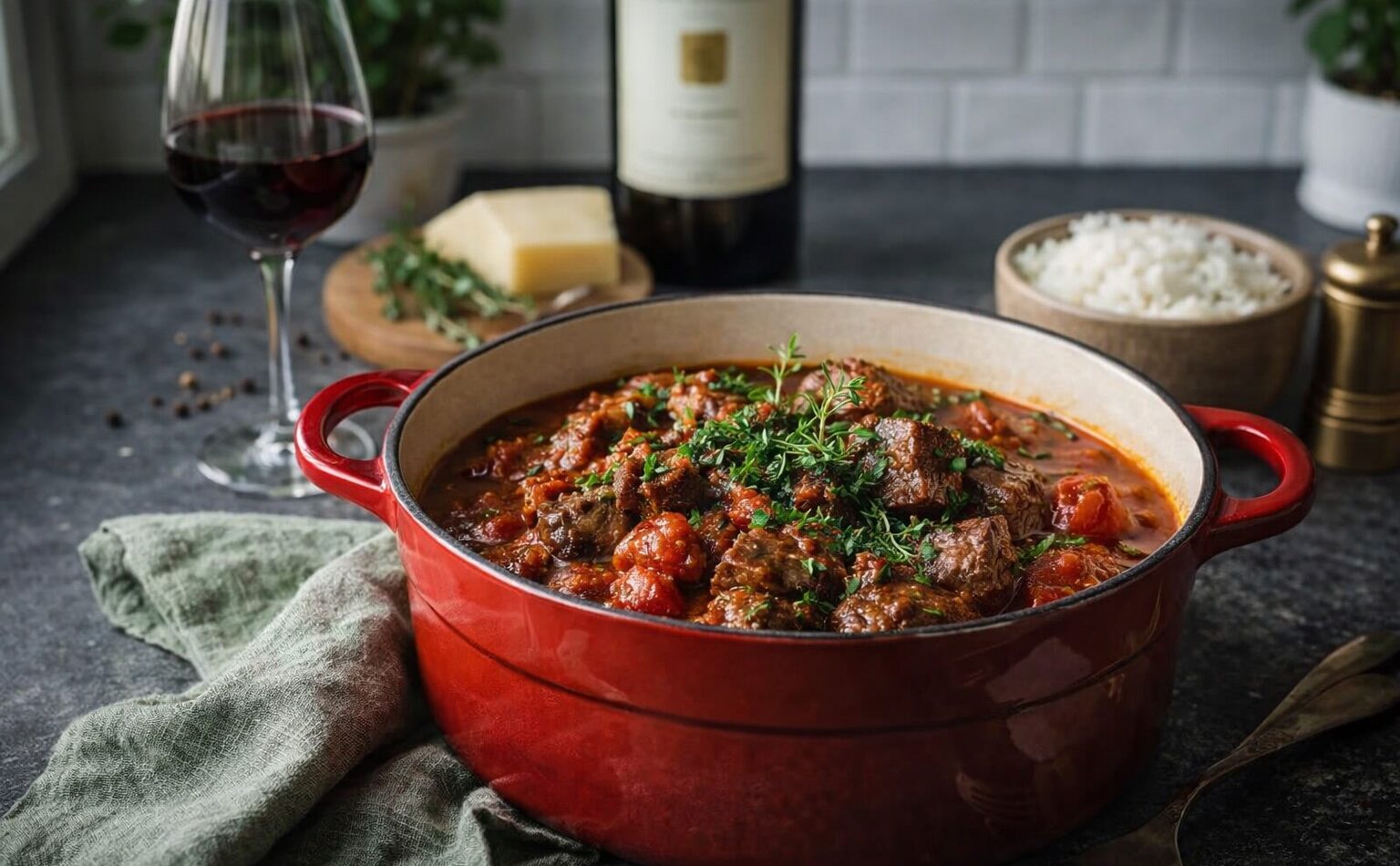
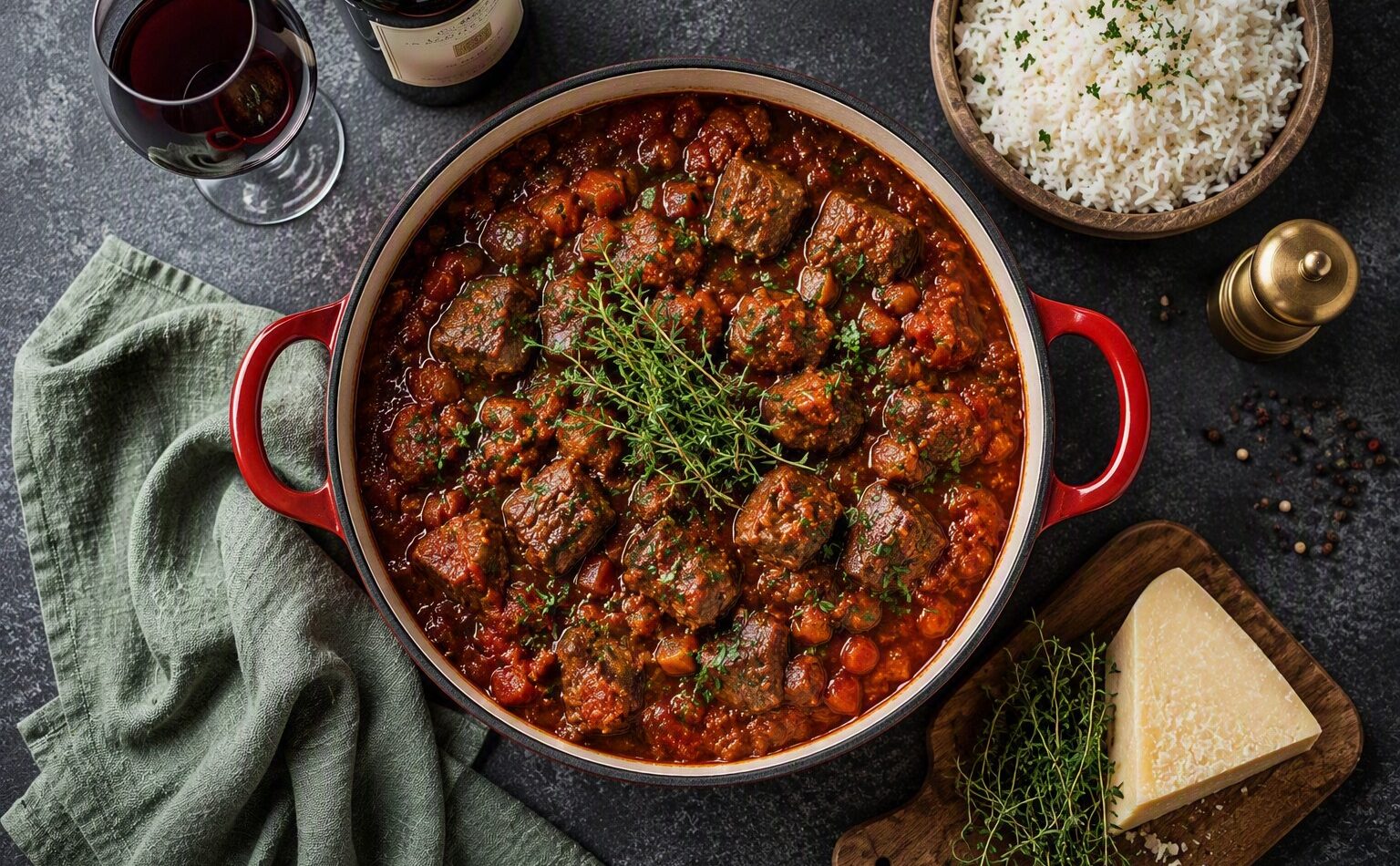
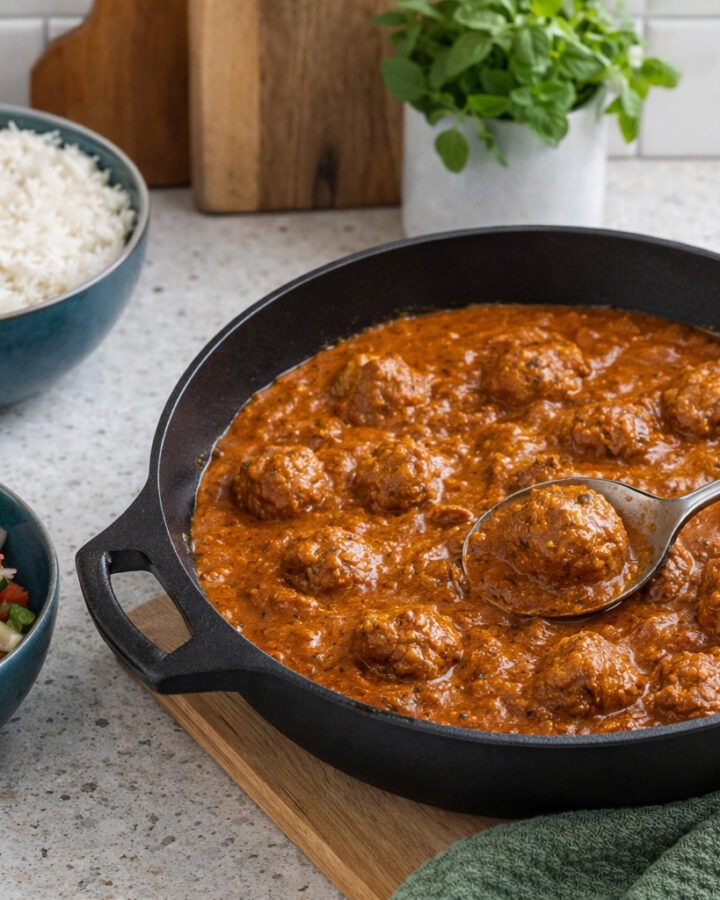
Create a deeply comforting bowl with this Tuscan Red WinePorkStew, where tender pieces of pork gently simmer in a rich tomato and herb sauce until meltingly soft.
Pat the pork shoulder pieces completely dry with paper towels and season generously on all sides with sea salt and freshly ground black pepper. Heat a heavy-bottomed pot or Dutch oven over medium-high heat and add the olive oil. Once the oil begins to shimmer, sear the pork in batches, taking care not to overcrowd the pot. Cook for about 3–4 minutes per side until each piece develops a deep golden crust. Transfer the browned pork to a plate and set aside.
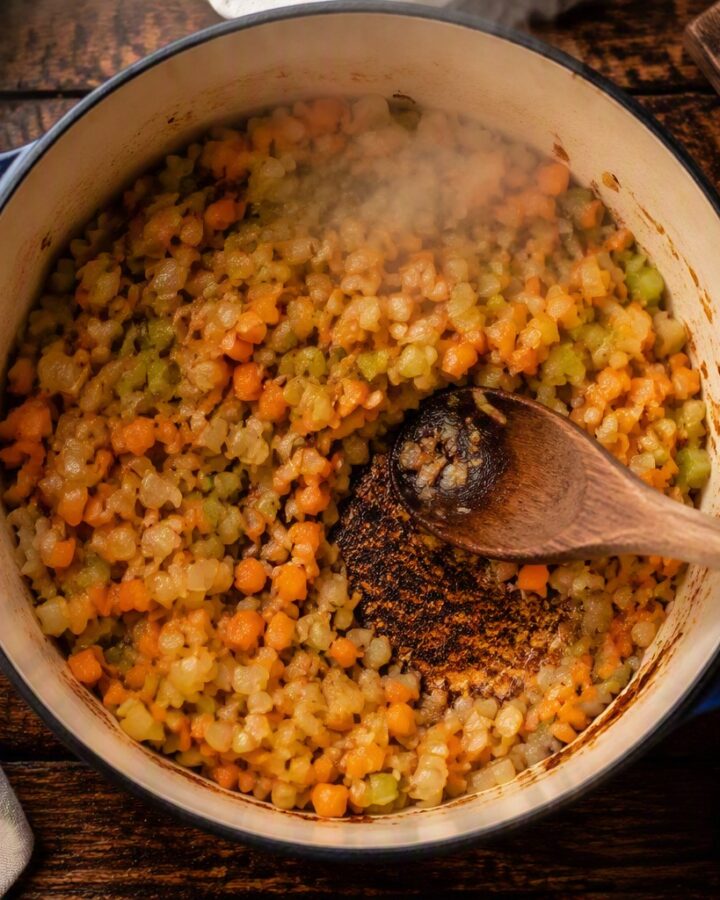
Reduce the heat to medium. In the same pot, add the chopped onion, carrots, and celery to the flavourful browned bits left behind—this classic Italian base is known as a soffritto. Sauté for 6–8 minutes, stirring occasionally and gently scraping the bottom of the pot, until the vegetables soften and the onion becomes translucent. Stir in the minced garlic and cook for another minute until fragrant.
Add the tomato paste and cook for about a minute, allowing it to coat the vegetables and develop a deeper colour and sweetness. Pour in the red wine to de-glaze the pot, using a wooden spoon to lift all the rich caramelised bits from the base. Let the wine simmer and reduce by about half, which will take roughly 2–3 minutes.
Return the seared pork and any resting juices to the pot. Pour in the crushed tomatoes and chicken stock, ensuring the liquid nearly covers the meat. Stir gently to combine. Add the rosemary, thyme, and bay leaves, then bring the stew to a gentle simmer.
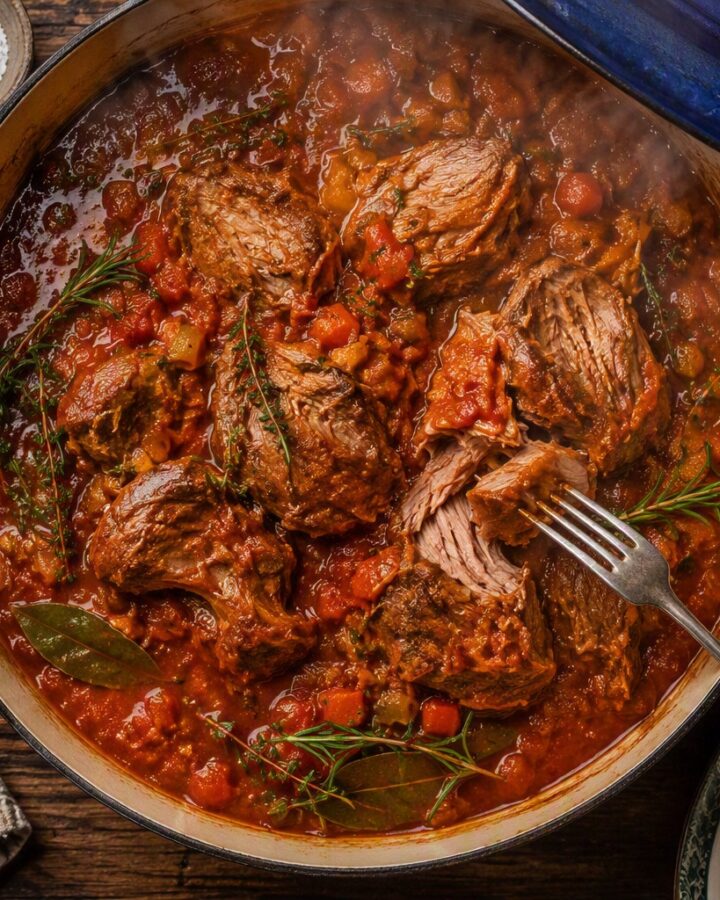
Once the stew begins to bubble softly, reduce the heat to low. Cover the pot with the lid slightly ajar and allow it to cook slowly for 2 to 2½ hours. The pork is ready when it becomes beautifully tender and easily pulls apart with a fork. Taste and adjust the seasoning with additional salt and pepper if needed.
Before serving, remove the rosemary and thyme sprigs along with the bay leaves. If a thicker sauce is desired, allow the stew to simmer uncovered for the final 15–20 minutes so it can gently reduce. The finished stew should be rich and deeply fragrant, with tender pork nestled in a velvety tomato and herb sauce that clings to every bite.
A few details make all the difference
01
Build Maximum Flavour with a Proper Sear
Patting the pork completely dry before seasoning is essential. Moisture prevents browning, so take an extra minute with kitchen paper. Sear the pork in small batches and resist moving it too soon. A deep golden crust creates the rich savoury flavours that form the foundation of the finished stew.
02
Take Time with the Soffritto
The onion, carrot and celery mixture should soften slowly rather than colour quickly. Stir occasionally and scrape up the browned pork bits from the base of the pot. These caramelised pieces dissolve into the vegetables, creating a richer and more complex sauce.
03
Let the Stew Braise Gently
Once the tomatoes, stock and herbs have been added, maintain only a gentle simmer. Fast boiling can tighten the pork and reduce tenderness. Keeping the lid slightly ajar allows slow reduction while the pork gradually becomes fork-tender and the sauce develops a silky consistency.
Why this recipe works
Rustic yet elegant, it’s the kind of slow-cooked dish that fills the kitchen with warmth and makes the perfect centerpiece for a cozy evening at the table. Discover the recipe and bring a little Italian countryside comfort to your kitchen.
Cook’s notes
Refrigerator
Allow the stew to cool completely before transferring to an airtight container. Store in the refrigerator for up to 4 days.
Freezer
Portion the cooled stew into freezer-safe containers or sealed bags and freeze for up to 3 months.
To Reheat
Warm gently on the stovetop over low heat, adding a small splash of broth or water if needed to loosen the sauce and restore its silky texture.
Pat the pork shoulder pieces completely dry with paper towels and season generously on all sides with sea salt and freshly ground black pepper. Heat a heavy-bottomed pot or Dutch oven over medium-high heat and add the olive oil. Once the oil begins to shimmer, sear the pork in batches, taking care not to overcrowd the pot. Cook for about 3–4 minutes per side until each piece develops a deep golden crust. Transfer the browned pork to a plate and set aside.
Reduce the heat to medium. In the same pot, add the chopped onion, carrots, and celery to the flavourful browned bits left behind—this classic Italian base is known as a soffritto. Sauté for 6–8 minutes, stirring occasionally and gently scraping the bottom of the pot, until the vegetables soften and the onion becomes translucent. Stir in the minced garlic and cook for another minute until fragrant.
Add the tomato paste and cook for about a minute, allowing it to coat the vegetables and develop a deeper colour and sweetness. Pour in the red wine to de-glaze the pot, using a wooden spoon to lift all the rich caramelised bits from the base. Let the wine simmer and reduce by about half, which will take roughly 2–3 minutes.
Return the seared pork and any resting juices to the pot. Pour in the crushed tomatoes and chicken stock, ensuring the liquid nearly covers the meat. Stir gently to combine. Add the rosemary, thyme, and bay leaves, then bring the stew to a gentle simmer.
Once the stew begins to bubble softly, reduce the heat to low. Cover the pot with the lid slightly ajar and allow it to cook slowly for 2 to 2½ hours. The pork is ready when it becomes beautifully tender and easily pulls apart with a fork. Taste and adjust the seasoning with additional salt and pepper if needed.
Before serving, remove the rosemary and thyme sprigs along with the bay leaves. If a thicker sauce is desired, allow the stew to simmer uncovered for the final 15–20 minutes so it can gently reduce. The finished stew should be rich and deeply fragrant, with tender pork nestled in a velvety tomato and herb sauce that clings to every bite.
Cook’s notes
Refrigerator: Allow the stew to cool completely before transferring to an airtight container. Store in the refrigerator for up to 4 days.
Freezer: Portion the cooled stew into freezer-safe containers or sealed bags and freeze for up to 3 months.
To Reheat: Warm gently on the stovetop over low heat, adding a small splash of broth or water if needed to loosen the sauce and restore its silky texture.
Cooking mode
Tuscan Red Wine Pork Stew
Pat the pork shoulder pieces completely dry with paper towels and season generously on all sides with sea salt and freshly ground black pepper. Heat a heavy-bottomed pot or Dutch oven over medium-high heat and add the olive oil. Once the oil begins to shimmer, sear the pork in batches, taking care not to overcrowd the pot. Cook for about 3–4 minutes per side until each piece develops a deep golden crust. Transfer the browned pork to a plate and set aside.
Reduce the heat to medium. In the same pot, add the chopped onion, carrots, and celery to the flavourful browned bits left behind—this classic Italian base is known as a soffritto. Sauté for 6–8 minutes, stirring occasionally and gently scraping the bottom of the pot, until the vegetables soften and the onion becomes translucent. Stir in the minced garlic and cook for another minute until fragrant.
Add the tomato paste and cook for about a minute, allowing it to coat the vegetables and develop a deeper colour and sweetness. Pour in the red wine to de-glaze the pot, using a wooden spoon to lift all the rich caramelised bits from the base. Let the wine simmer and reduce by about half, which will take roughly 2–3 minutes.
Return the seared pork and any resting juices to the pot. Pour in the crushed tomatoes and chicken stock, ensuring the liquid nearly covers the meat. Stir gently to combine. Add the rosemary, thyme, and bay leaves, then bring the stew to a gentle simmer.
Once the stew begins to bubble softly, reduce the heat to low. Cover the pot with the lid slightly ajar and allow it to cook slowly for 2 to 2½ hours. The pork is ready when it becomes beautifully tender and easily pulls apart with a fork. Taste and adjust the seasoning with additional salt and pepper if needed.
Before serving, remove the rosemary and thyme sprigs along with the bay leaves. If a thicker sauce is desired, allow the stew to simmer uncovered for the final 15–20 minutes so it can gently reduce. The finished stew should be rich and deeply fragrant, with tender pork nestled in a velvety tomato and herb sauce that clings to every bite.
A letter from table number seven
Something delicious for the weekend.
Seasonal recipes and stories, delivered occasionally.
error: Content is protected !!
We use cookies to ensure that we give you the best experience on our website. If you continue to use this site we will assume that you are happy with it.