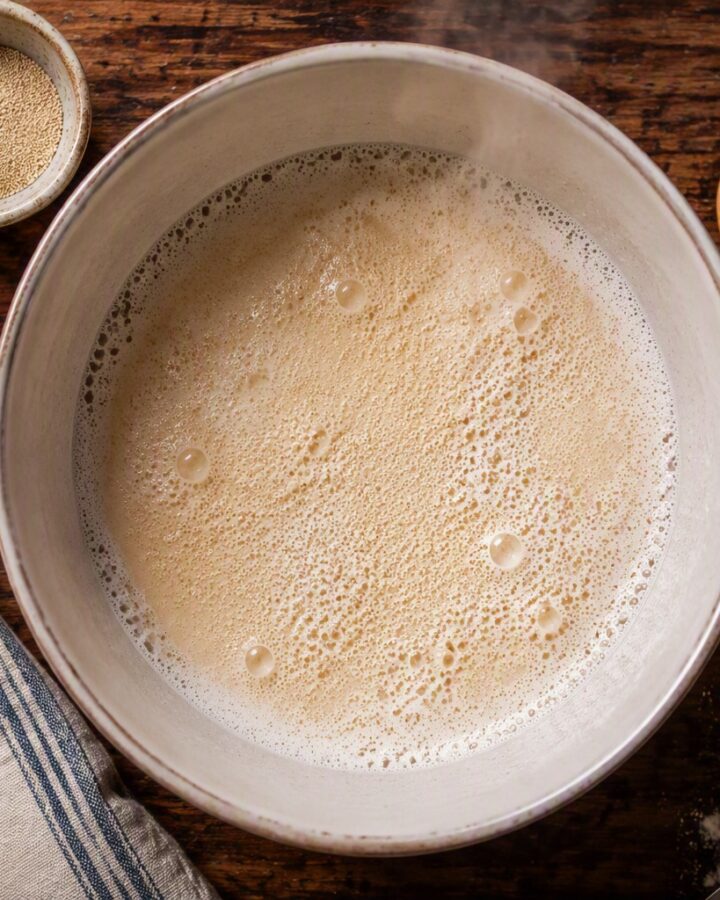
In a large mixing bowl, combine the warm milk, yeast, and honey. Allow the mixture to rest for about 5 minutes, until it becomes lightly foamy, indicating the yeast is active.
Add the eggs, 3½ cups of flour, and the kosher salt to the yeast mixture. Using a dough hook or mixing by hand, combine until a soft dough begins to form. If the dough feels overly sticky, gradually add the remaining flour. Incorporate 2 tablespoons of the softened butter and knead for about 5 minutes, until the dough becomes smooth, soft, and elastic.
Cover the bowl with plastic wrap or a clean kitchen towel and place it in a warm spot. Allow the dough to rise for about 1 hour, or until it has doubled in size.
In a small bowl, combine the remaining 4 tablespoons of softened butter with the grated garlic, Parmesan, basil, thyme, and sage. Mix until well blended and fragrant. Set aside.
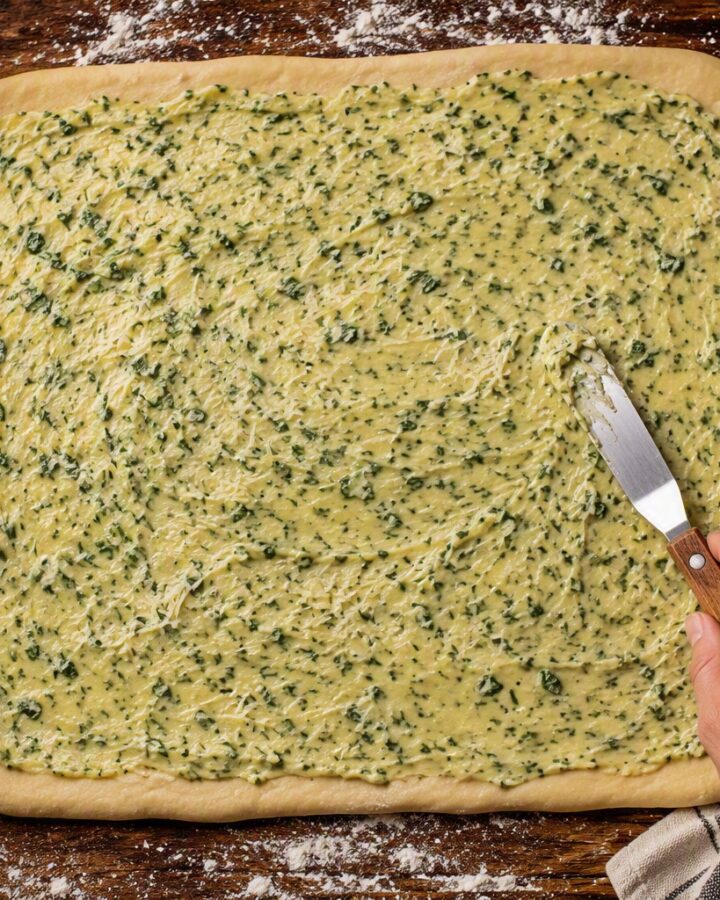
Lightly flour a clean work surface. Roll the risen dough into a rectangle approximately 12 × 18 inches. Spread the garlic herb butter evenly over the surface, reaching all the way to the edges.
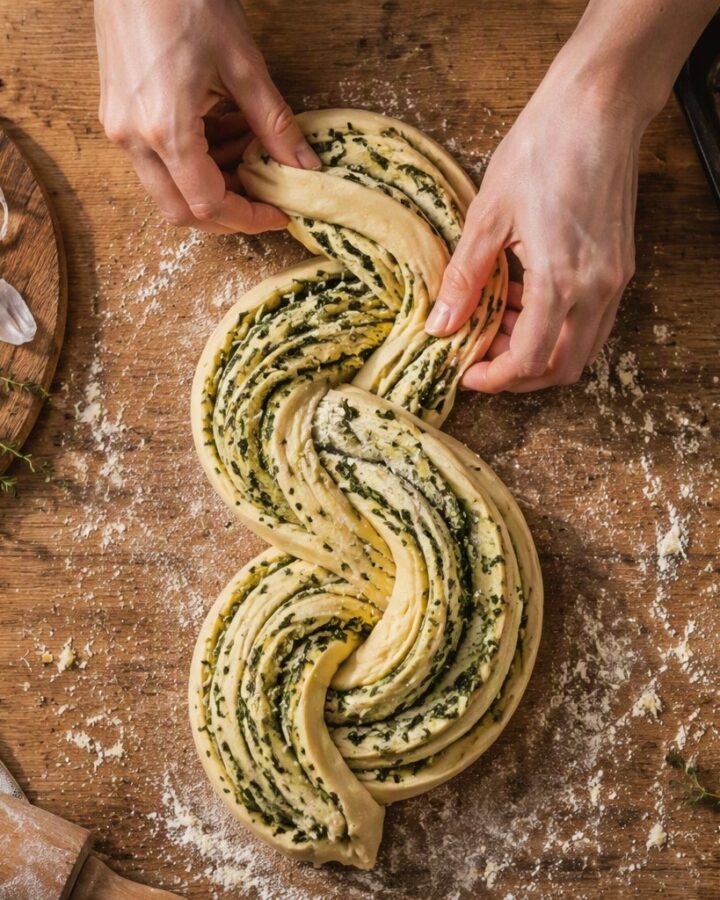
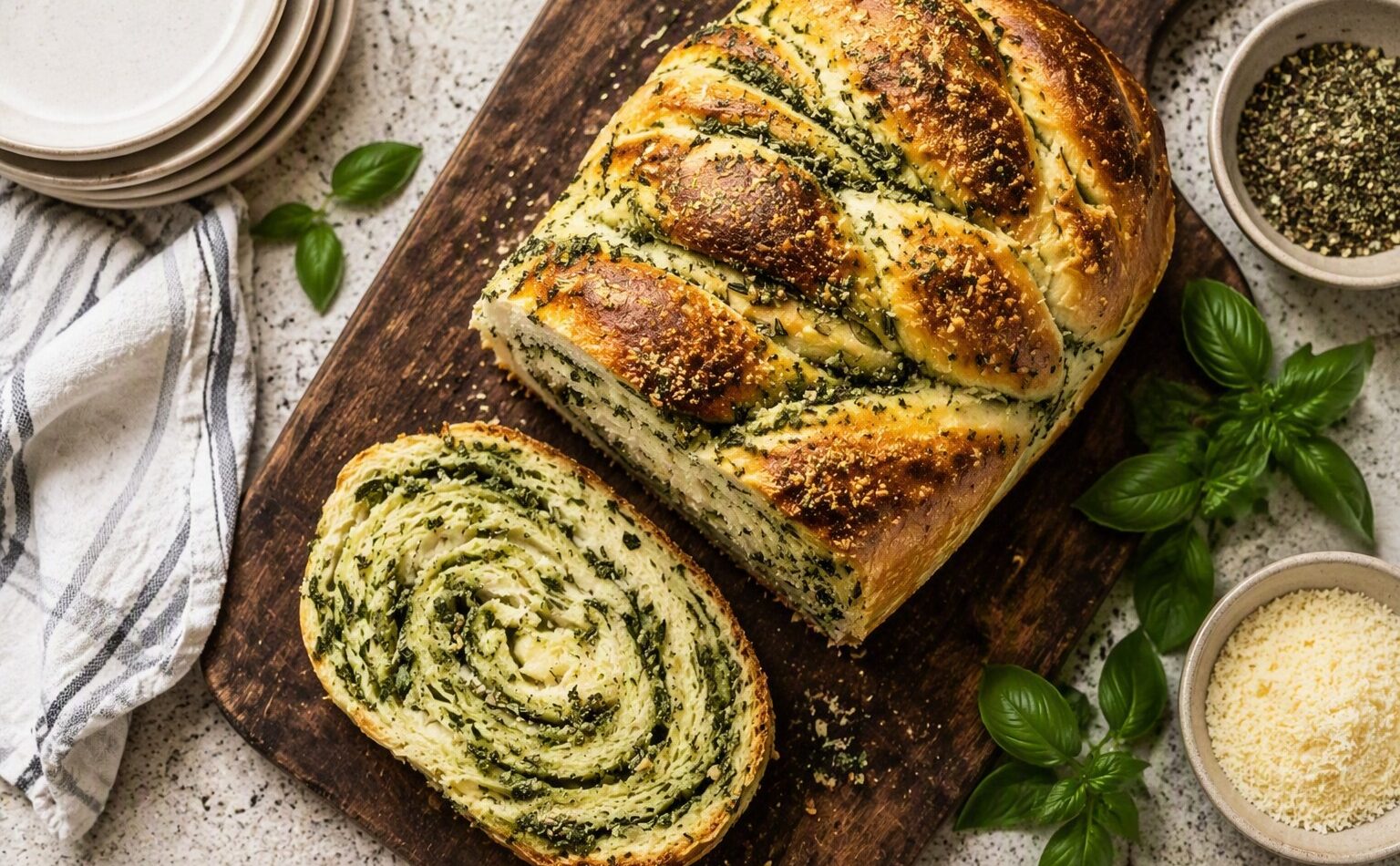
Starting from the longer side, roll the dough tightly into a log. With a sharp knife, slice the log lengthwise, leaving one end slightly intact. Gently twist the two halves over one another so the herb-filled layers are exposed. Coil the twisted dough into a loose “S” shape and place it onto a parchment-lined baking sheet.
Cover the shaped dough and allow it to rest for another 45 minutes, until slightly puffed.
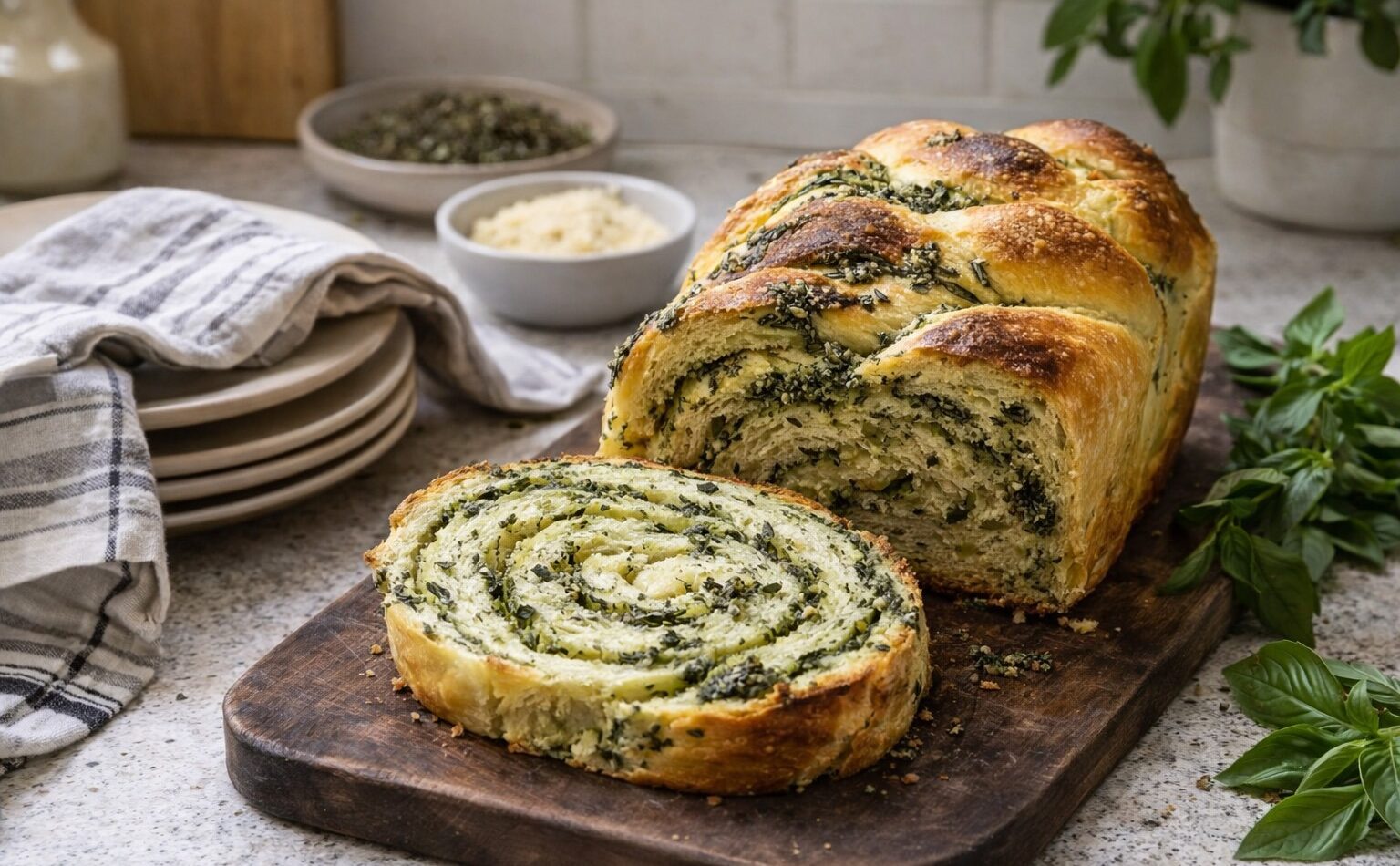
Preheat the oven to 350°F (175°C). Bake for 30–35 minutes, or until the loaf is beautifully golden and cooked through. While still warm, brush lightly with extra butter for a glossy finish and added richness.
A few details make all the difference
01
Activate the Yeast Properly
The milk should feel warm to the touch, not hot. If the milk is too hot it can damage the yeast, while cool milk may slow activation. After 5 minutes, look for a light foamy layer across the surface as proof that the yeast is active before continuing.
02
Spread the Herb Butter Right to the Edges
When rolling out the dough, ensure the garlic herb butter is distributed evenly from corner to corner. This guarantees every slice contains visible swirls of butter, herbs and Parmesan, creating a more attractive loaf and a balanced flavour throughout.
03
Twist Gently to Reveal the Layers
After slicing the rolled dough lengthwise, twist carefully without pulling too tightly. Keeping the exposed herb-filled layers visible creates the beautiful braided appearance and allows the loaf to bake evenly while showcasing the savoury filling.
Why this recipe works
Each soft, pillowy layer is infused with fragrant garlic, rich butter, and fresh garden herbs, creating a loaf that is both comforting and elegant.
Serve it warm alongside a bowl of soup, tear it apart at the table with a little extra butter, or toast a slice the following morning for a quietly indulgent treat. However it’s enjoyed, this loaf brings a touch of rustic charm to any meal.
Cook’s notes
If the dough feels overly sticky while mixing, add a little flour at a time until it becomes soft, smooth, and easy to handle.To prepare ahead, shape the loaf and cover it well before placing it in the refrigerator overnight. When ready to bake, allow the dough to rest at room temperature for about an hour so it can gently come back to life before going into the oven.Any leftover bread can be kept in an airtight container at room temperature for up to 3 days, or wrapped and frozen for up to 3 months. When ready to enjoy, simply warm or toast to bring back its soft, fragrant texture.
In a large mixing bowl, combine the warm milk, yeast, and honey. Allow the mixture to rest for about 5 minutes, until it becomes lightly foamy, indicating the yeast is active.
Add the eggs, 3½ cups of flour, and the kosher salt to the yeast mixture. Using a dough hook or mixing by hand, combine until a soft dough begins to form. If the dough feels overly sticky, gradually add the remaining flour. Incorporate 2 tablespoons of the softened butter and knead for about 5 minutes, until the dough becomes smooth, soft, and elastic.
Cover the bowl with plastic wrap or a clean kitchen towel and place it in a warm spot. Allow the dough to rise for about 1 hour, or until it has doubled in size.
In a small bowl, combine the remaining 4 tablespoons of softened butter with the grated garlic, Parmesan, basil, thyme, and sage. Mix until well blended and fragrant. Set aside.
Lightly flour a clean work surface. Roll the risen dough into a rectangle approximately 12 × 18 inches. Spread the garlic herb butter evenly over the surface, reaching all the way to the edges.
Starting from the longer side, roll the dough tightly into a log. With a sharp knife, slice the log lengthwise, leaving one end slightly intact. Gently twist the two halves over one another so the herb-filled layers are exposed. Coil the twisted dough into a loose “S” shape and place it onto a parchment-lined baking sheet.
Cover the shaped dough and allow it to rest for another 45 minutes, until slightly puffed.
Preheat the oven to 350°F (175°C). Bake for 30–35 minutes, or until the loaf is beautifully golden and cooked through. While still warm, brush lightly with extra butter for a glossy finish and added richness.
Cook’s notes
If the dough feels overly sticky while mixing, add a little flour at a time until it becomes soft, smooth, and easy to handle.:
To prepare ahead, shape the loaf and cover it well before placing it in the refrigerator overnight. When ready to bake, allow the dough to rest at room temperature for about an hour so it can gently come back to life before going into the oven.:
Any leftover bread can be kept in an airtight container at room temperature for up to 3 days, or wrapped and frozen for up to 3 months. When ready to enjoy, simply warm or toast to bring back its soft, fragrant texture.:
Cooking mode
Soft Pull-Apart Garlic Herb Swirl Bread
In a large mixing bowl, combine the warm milk, yeast, and honey. Allow the mixture to rest for about 5 minutes, until it becomes lightly foamy, indicating the yeast is active.
Add the eggs, 3½ cups of flour, and the kosher salt to the yeast mixture. Using a dough hook or mixing by hand, combine until a soft dough begins to form. If the dough feels overly sticky, gradually add the remaining flour. Incorporate 2 tablespoons of the softened butter and knead for about 5 minutes, until the dough becomes smooth, soft, and elastic.
Cover the bowl with plastic wrap or a clean kitchen towel and place it in a warm spot. Allow the dough to rise for about 1 hour, or until it has doubled in size.
In a small bowl, combine the remaining 4 tablespoons of softened butter with the grated garlic, Parmesan, basil, thyme, and sage. Mix until well blended and fragrant. Set aside.
Lightly flour a clean work surface. Roll the risen dough into a rectangle approximately 12 × 18 inches. Spread the garlic herb butter evenly over the surface, reaching all the way to the edges.
Starting from the longer side, roll the dough tightly into a log. With a sharp knife, slice the log lengthwise, leaving one end slightly intact. Gently twist the two halves over one another so the herb-filled layers are exposed. Coil the twisted dough into a loose “S” shape and place it onto a parchment-lined baking sheet.
Cover the shaped dough and allow it to rest for another 45 minutes, until slightly puffed.
Preheat the oven to 350°F (175°C). Bake for 30–35 minutes, or until the loaf is beautifully golden and cooked through. While still warm, brush lightly with extra butter for a glossy finish and added richness.
A letter from table number seven
Something delicious for the weekend.
Seasonal recipes and stories, delivered occasionally.
error: Content is protected !!
We use cookies to ensure that we give you the best experience on our website. If you continue to use this site we will assume that you are happy with it.