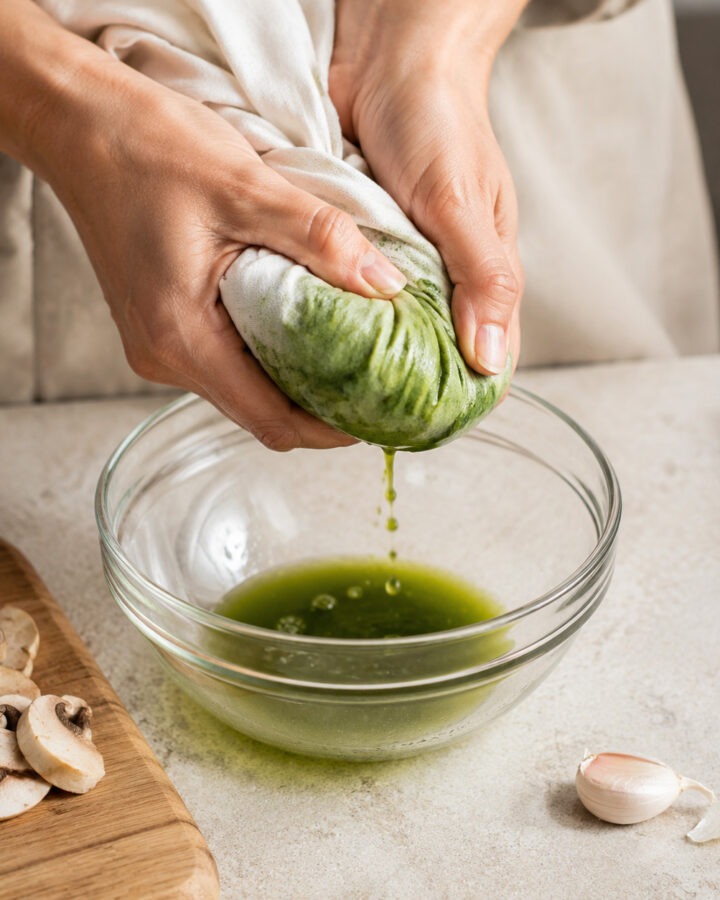
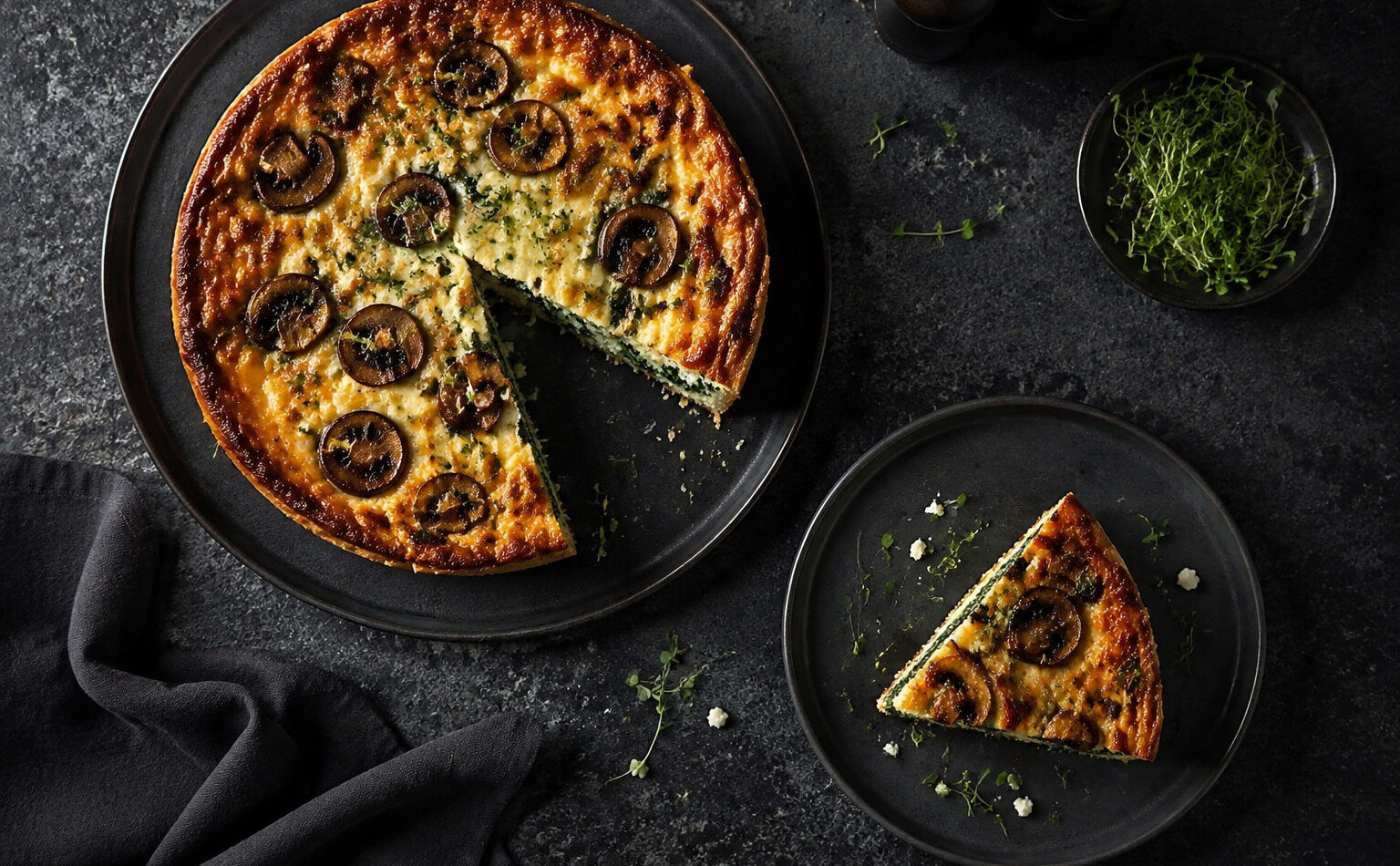
Preheat the oven to 180°C (160°C fan). As it warms, take a moment to prepare everything with care. The spinach, once thawed, should be pressed completely dry in a clean tea towel or cheesecloth—this small detail ensures a quiche that sets beautifully. Finely mince the garlic, and slice the mushrooms into neat, even pieces, ready for the pan.
Warm half the oil in a skillet over a medium–high heat. Add the mushrooms and allow them to cook until they release their moisture and it evaporates away entirely, leaving them tender and lightly golden. This deepens their flavour and keeps the finished quiche from becoming waterlogged. In the final minute, stir through the garlic and a pinch of salt, just until fragrant, then set the mixture aside.
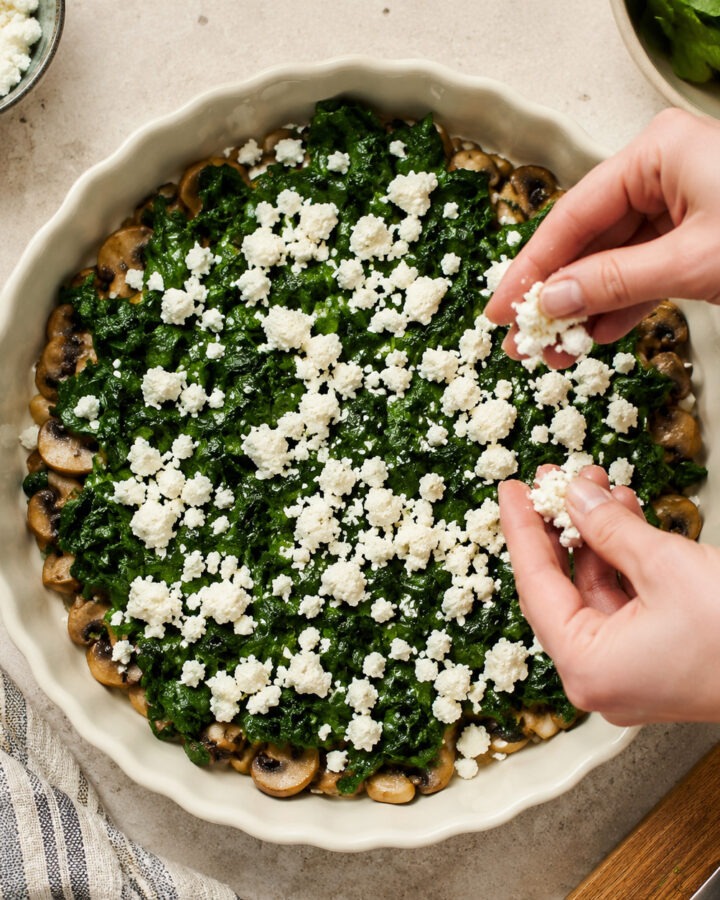
Lightly oil a 23cm pie dish, brushing the base and sides. Layer with intention: first the mushrooms, spread evenly; then the spinach, gently distributed; and finally the feta, crumbled over the top. Each layer brings its own texture and balance to the whole.
In a bowl, whisk together the eggs, milk, Parmesan, and black pepper until smooth and cohesive. Room-temperature eggs will blend more readily, giving a silkier custard. Keep the whisking gentle—just enough to bring everything together.
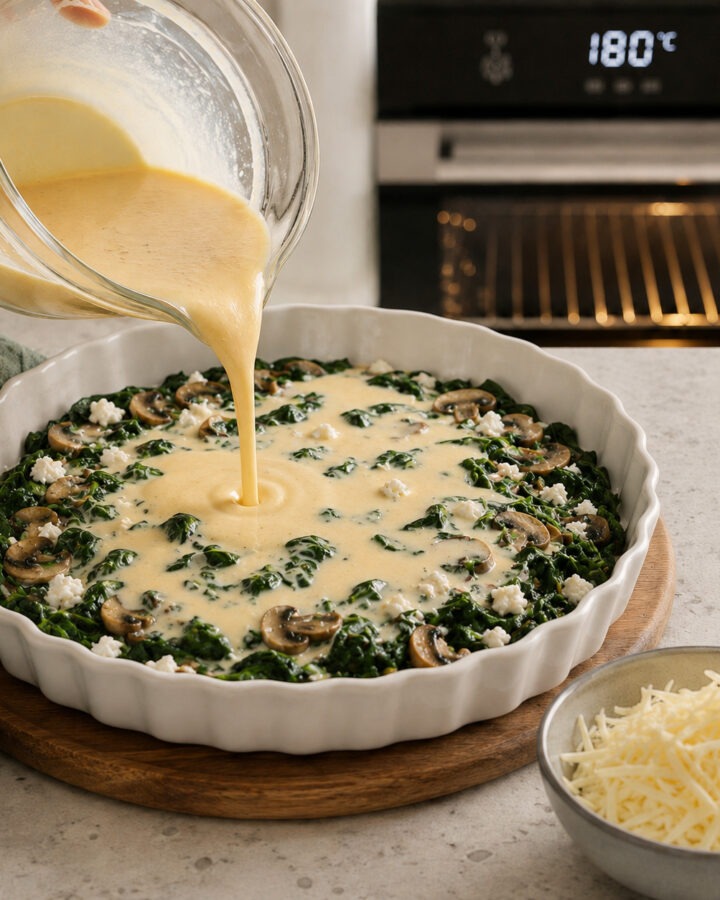
Pour the custard slowly over the layered filling, allowing it to settle into every corner. Finish with the mozzarella scattered evenly across the surface. Bake on the centre rack for around 50 minutes, until the quiche is set at the edges with a soft, delicate wobble at the centre. It will continue to firm as it rests.
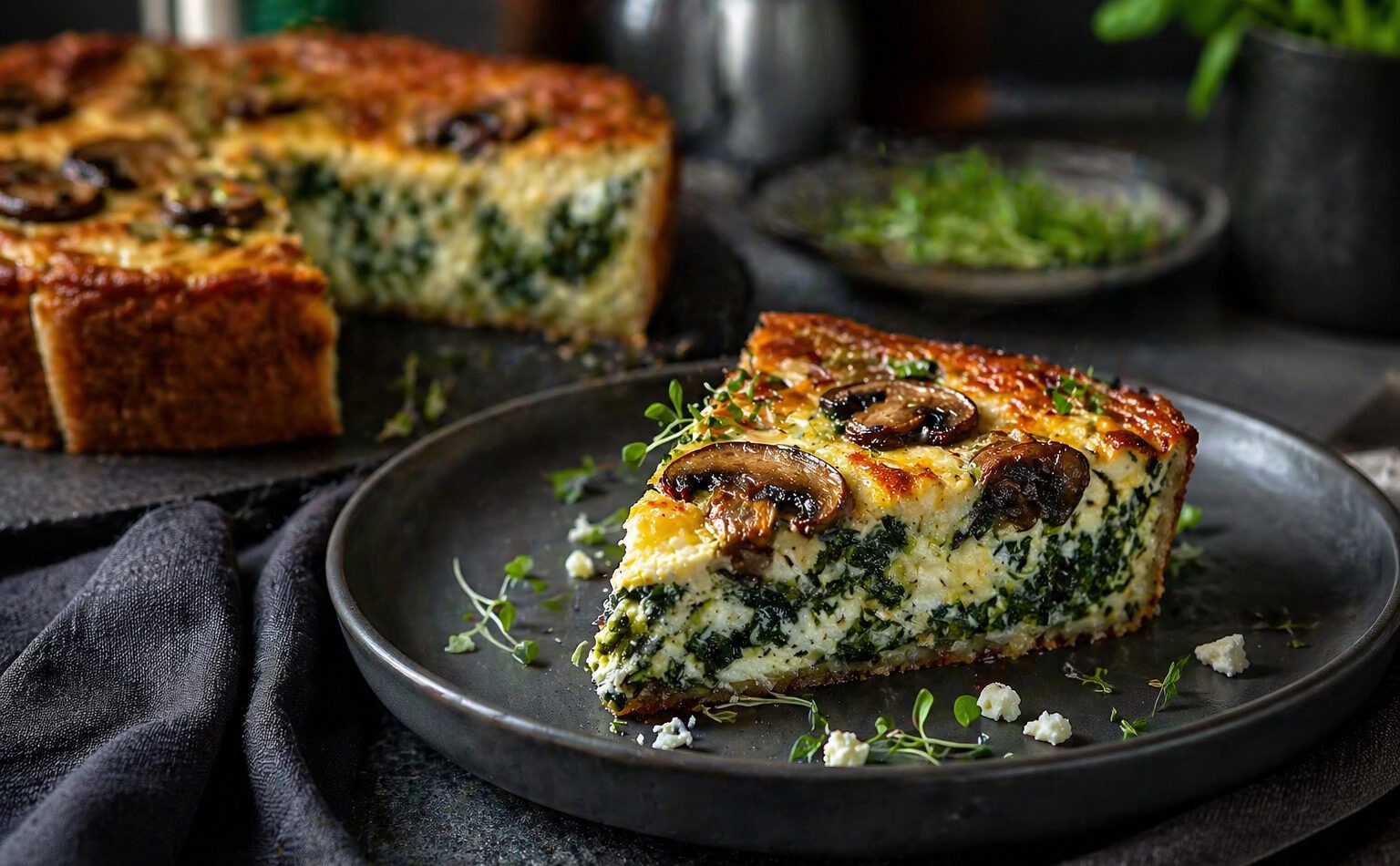
Remove from the oven and leave to stand for 5–10 minutes before slicing. This brief pause allows the custard to settle fully, giving you clean, composed slices. Serve warm, or at room temperature—both are equally inviting.
A few details make all the difference
01
Take your time with the spinach
If using frozen, it must be thoroughly pressed dry. Any lingering moisture will find its way into the custard, leaving it loose rather than delicately set. A clean tea towel or your hands will do the job—just keep going until nothing more yields.
02
Cook the mushrooms properly
They need a moment in the pan to release and evaporate their liquid. Added raw, they’ll surrender that moisture in the oven instead, softening the structure you’re aiming for.
03
Trust the gentle wobble
It’s tempting to wait for a perfectly firm centre, but quiche should come out with the slightest tremble—set at the edges, softly yielding in the middle. It will continue to settle as it rests, finding its final texture just out of the oven.
Why this recipe works
Satisfyingly rich, quietly nourishing – A generous blend of eggs and cheese gives each slice a soft, custard-like depth that feels indulgent, yet sustains you well beyond the first cup of coffee. Effortlessly economical – Made from simple, thoughtful ingredients, it brings a sense of abundance to the table without demanding much in return—ideal for feeding a few, or planning ahead for the days to come. Naturally light, without compromise – With no pastry to weigh it down, the filling takes centre stage—delicate, flavourful, and inherently gluten-free without a second thought. Unfussy to prepare – A brief moment at the stove, a quick whisk, and it’s ready for the oven. From start to finish, it slips easily into even the busiest of mornings. Made for the rhythm of the week – It keeps beautifully, reheating with ease, making it a quiet ally for those mornings when time is short but standards remain high.
Cook’s notes
Take your time with the spinach
If using frozen, it must be thoroughly pressed dry. Any lingering moisture will find its way into the custard, leaving it loose rather than delicately set. A clean tea towel or your hands will do the job—just keep going until nothing more yields.
Cook the mushrooms properly
They need a moment in the pan to release and evaporate their liquid. Added raw, they’ll surrender that moisture in the oven instead, softening the structure you’re aiming for.
Trust the gentle wobble
It’s tempting to wait for a perfectly firm centre, but quiche should come out with the slightest tremble—set at the edges, softly yielding in the middle. It will continue to settle as it rests, finding its final texture just out of the oven.
Let the filling cool before assembling
Allowing the spinach and mushrooms to cool fully before combining helps avoid trapped steam, which can otherwise disrupt the smooth, custard-like finish.
Preheat the oven to 180°C (160°C fan). As it warms, take a moment to prepare everything with care. The spinach, once thawed, should be pressed completely dry in a clean tea towel or cheesecloth—this small detail ensures a quiche that sets beautifully. Finely mince the garlic, and slice the mushrooms into neat, even pieces, ready for the pan.
Warm half the oil in a skillet over a medium–high heat. Add the mushrooms and allow them to cook until they release their moisture and it evaporates away entirely, leaving them tender and lightly golden. This deepens their flavour and keeps the finished quiche from becoming waterlogged. In the final minute, stir through the garlic and a pinch of salt, just until fragrant, then set the mixture aside.
Lightly oil a 23cm pie dish, brushing the base and sides. Layer with intention: first the mushrooms, spread evenly; then the spinach, gently distributed; and finally the feta, crumbled over the top. Each layer brings its own texture and balance to the whole.
In a bowl, whisk together the eggs, milk, Parmesan, and black pepper until smooth and cohesive. Room-temperature eggs will blend more readily, giving a silkier custard. Keep the whisking gentle—just enough to bring everything together.
Pour the custard slowly over the layered filling, allowing it to settle into every corner. Finish with the mozzarella scattered evenly across the surface. Bake on the centre rack for around 50 minutes, until the quiche is set at the edges with a soft, delicate wobble at the centre. It will continue to firm as it rests.
Remove from the oven and leave to stand for 5–10 minutes before slicing. This brief pause allows the custard to settle fully, giving you clean, composed slices. Serve warm, or at room temperature—both are equally inviting.
Cook’s notes
Take your time with the spinach: If using frozen, it must be thoroughly pressed dry. Any lingering moisture will find its way into the custard, leaving it loose rather than delicately set. A clean tea towel or your hands will do the job—just keep going until nothing more yields.
Cook the mushrooms properly: They need a moment in the pan to release and evaporate their liquid. Added raw, they’ll surrender that moisture in the oven instead, softening the structure you’re aiming for.
Trust the gentle wobble: It’s tempting to wait for a perfectly firm centre, but quiche should come out with the slightest tremble—set at the edges, softly yielding in the middle. It will continue to settle as it rests, finding its final texture just out of the oven.
Let the filling cool before assembling: Allowing the spinach and mushrooms to cool fully before combining helps avoid trapped steam, which can otherwise disrupt the smooth, custard-like finish.
Cooking mode
Creamed Spinach and Woodland Mushroom Quiche
Preheat the oven to 180°C (160°C fan). As it warms, take a moment to prepare everything with care. The spinach, once thawed, should be pressed completely dry in a clean tea towel or cheesecloth—this small detail ensures a quiche that sets beautifully. Finely mince the garlic, and slice the mushrooms into neat, even pieces, ready for the pan.
Warm half the oil in a skillet over a medium–high heat. Add the mushrooms and allow them to cook until they release their moisture and it evaporates away entirely, leaving them tender and lightly golden. This deepens their flavour and keeps the finished quiche from becoming waterlogged. In the final minute, stir through the garlic and a pinch of salt, just until fragrant, then set the mixture aside.
Lightly oil a 23cm pie dish, brushing the base and sides. Layer with intention: first the mushrooms, spread evenly; then the spinach, gently distributed; and finally the feta, crumbled over the top. Each layer brings its own texture and balance to the whole.
In a bowl, whisk together the eggs, milk, Parmesan, and black pepper until smooth and cohesive. Room-temperature eggs will blend more readily, giving a silkier custard. Keep the whisking gentle—just enough to bring everything together.
Pour the custard slowly over the layered filling, allowing it to settle into every corner. Finish with the mozzarella scattered evenly across the surface. Bake on the centre rack for around 50 minutes, until the quiche is set at the edges with a soft, delicate wobble at the centre. It will continue to firm as it rests.
Remove from the oven and leave to stand for 5–10 minutes before slicing. This brief pause allows the custard to settle fully, giving you clean, composed slices. Serve warm, or at room temperature—both are equally inviting.
A letter from table number seven
Something delicious for the weekend.
Seasonal recipes and stories, delivered occasionally.
error: Content is protected !!
We use cookies to ensure that we give you the best experience on our website. If you continue to use this site we will assume that you are happy with it.